

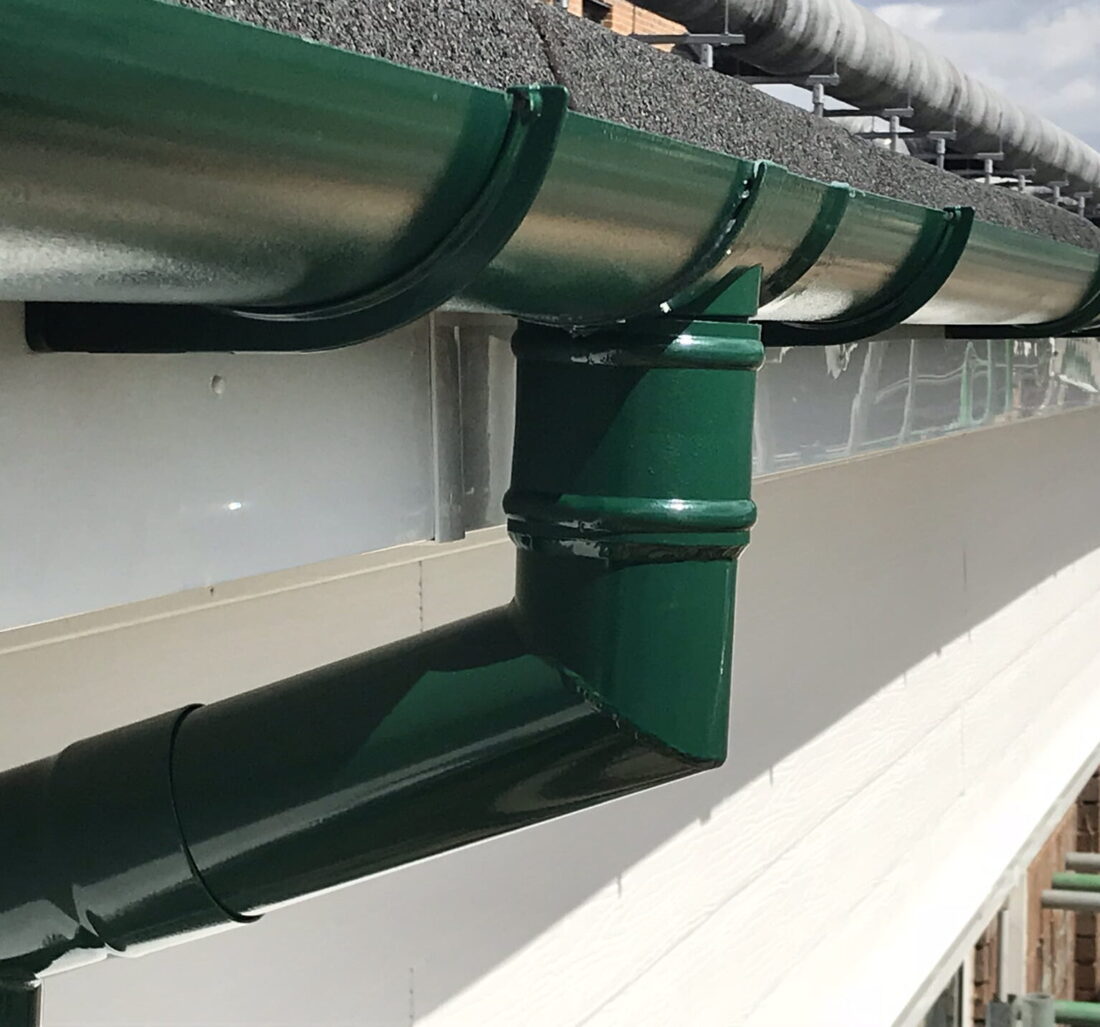
Manor Gutter Replacement: A Practical Guide
A manor gutter replacement is rarely just a case of taking down old sections and fitting new ones. On a period property, the gutter line is part of the elevation. Its depth, profile, outlet position and colour all affect how the building looks, while its capacity determines whether rainwater stays safely away from masonry, windows and foundations.
The right replacement should respect the existing character without repeating the weaknesses of an ageing system. Cast iron may have cracked, rusted at joints or become difficult to maintain. Older plastic replacements can fade, distort or look out of scale against original brickwork and stone. Aluminium offers a practical alternative: it is lightweight, corrosion-resistant and available in traditional cast-style profiles that retain the visual weight required on a manor house or country property.
Start by assessing the existing gutter arrangement
Before choosing a profile, establish what is already in place and why it may have failed. Look at the complete rainwater route, not only the visible gutter. Water overflowing at one section may be caused by a blocked shoe, an undersized downpipe, a poorly positioned outlet or a roof valley delivering too much water into one point.
Measure the fascia line, the depth of the existing gutter, outlet locations and downpipe diameter. Take photographs of corners, stop ends, rise and fall, hopper heads and any decorative brackets. On older properties, these details are often inconsistent from one elevation to another following previous repairs. A measured survey prevents an attractive replacement profile being ordered with unsuitable outlets or insufficient bracket support.
Pay particular attention to roof catchment. A modest gutter may be appropriate along a short pitched roof but inadequate below a large slate roof, valley or dormer arrangement. Heavy rainfall is not unusual in the UK, and capacity needs to suit the roof area and the speed at which water reaches the eaves.
Check whether planning or listed building consent applies
For listed buildings and properties in conservation areas, replacing like for like may still require discussion with the local planning authority. Consent requirements depend on the building, the scope of the work and whether the proposed system changes visible materials, profile or detailing.
Cast aluminium is often selected where a cast-iron appearance is required but the owner wants a lower-maintenance system. However, it remains sensible to agree the proposed profile, finish, hopper heads and downpipes before ordering. Retaining the original visual proportions matters more than simply choosing a black gutter.
Choosing a suitable manor gutter profile
The term manor gutter can describe a traditional, substantial rainwater profile used on period and heritage-style properties rather than one universal size. The correct choice depends on the existing architecture, the roof drainage calculation and the fixing background available at the eaves.
Cast aluminium systems are particularly well suited to this type of work. Their moulded appearance and heavier visual section complement stone, brick and timber details, while aluminium avoids the ongoing rust treatment associated with cast iron. Standard lengths and matching fittings allow corners, angles, stop ends and outlets to be assembled into a complete system rather than improvised on site.
For less ornate elevations, an extruded aluminium profile can offer a cleaner appearance with long, straight runs and lower weight. This may suit rear elevations, extensions or newer parts of a large property. The trade-off is visual: an extruded profile may not reproduce the detail of an original cast gutter, so it should be selected carefully where the elevation is prominent.
Box gutters are another option, particularly on parapets, concealed eaves and larger roof areas. Pressed aluminium box guttering can provide high capacity and a neat architectural line, but it must be designed around falls, outlets and access for clearing debris. A larger gutter does not solve a drainage problem if its outlets remain undersized or poorly located.
Match the downpipes and hopper heads
A new gutter line should not discharge into tired, narrow or incompatible downpipes. Downpipe size affects how quickly water can leave the gutter, especially at valley outlets. Matching aluminium downpipes, offsets, shoes and clips create a consistent system and avoid mixed-material joints that can look unsuitable on a heritage property.
Hopper heads can be functional or decorative. On a formal front elevation, an ornamental hopper can provide the visual break expected between gutter and downpipe. On side and rear elevations, a simpler hopper or direct outlet may be more appropriate. The decision should be led by the property and water volume, not decoration alone.
Specify the finish before the order is placed
Black remains a common choice for traditional rainwater goods, but it is not the only suitable option. Dark grey, heritage greens, browns and bespoke powder-coated colours can be used to coordinate with window frames, fascias, render or existing architectural ironwork.
Powder coating gives aluminium a durable factory-applied finish and avoids the peeling and frequent repainting associated with neglected older systems. It is still worth checking the finish specification for coastal properties, exposed sites and heavily shaded elevations where dirt, moss and salt can affect appearance. A colour sample viewed against the actual masonry is more reliable than choosing from a screen image.
Where the system is intended to resemble traditional cast iron, consider the surface texture as well as the colour. A gloss finish can look too contemporary on some buildings, while a more restrained finish may sit more naturally alongside original details.
Installation details that protect the building
Gutter replacement works best when the fascia, soffit and fixing line are checked first. Rotten timber, loose boards or uneven eaves will make it difficult to create an accurate fall. Aluminium is light, but a full gutter in a downpour carries considerable water weight, so brackets must be fixed securely into sound material at suitable centres.
Set the gutter to fall towards each outlet without creating a visibly sloping line. On long elevations, this may mean falls from a high point towards outlets at both ends, or carefully planned outlet positions that suit the roof layout. The system should not hold standing water after fitting, as this can leave dirt lines, encourage debris build-up and indicate poor alignment.
Joints, outlets and stop ends need the correct seals and fixings for the chosen system. Do not mix components from different profiles on the assumption that they are interchangeable. Dimensions, socket depths and expansion allowances vary. Aluminium expands and contracts with temperature changes, and the manufacturer’s joining method is there to accommodate movement as well as prevent leaks.
Downpipes should be clipped firmly, with offsets used where needed to clear brick projections, string courses or eaves details. Position shoes so water is directed into a suitable drain or surface water connection, rather than washing against the base of the wall. If gullies are blocked, cracked or set too high, deal with them as part of the project.
Supply-only, cut-and-drop or fitting support?
The best purchasing route depends on the job. A competent roofing contractor may only need a measured component schedule supplied for installation. For straightforward runs, cut-to-length materials can reduce site cutting and make delivery easier to manage. Larger renovation projects may benefit from a full survey, technical advice and professional fitting, particularly where several roof levels, valleys or bespoke colours are involved.
Provide the supplier with elevation lengths, photographs, roof details, outlet positions and any required finish. This allows the system to be specified as a complete package rather than as a collection of individual parts. Gutters Direct Online can support supply-only requirements as well as cut-and-drop and installation projects, which is useful where access, heritage detailing or programme timing needs closer coordination.
Avoid the common shortcuts
The most expensive mistakes tend to come from treating gutters as an afterthought. Reusing undersized downpipes, fitting brackets into failing fascias, omitting extra outlets below valleys and ordering by visual guesswork can all lead to overflows after the first serious rainfall.
It is also unwise to replace only the worst lengths if the rest of the system is nearing the end of its service life. A phased approach can be sensible for budget reasons, but each phase should be planned so that profiles, finishes and connection points remain compatible.
A well-specified manor gutter replacement should look settled on the building from the day it is fitted, then quietly handle years of British weather with minimal attention. Take time to measure the drainage route, select a profile that belongs on the property and make sure every outlet has the capacity to do its job.