

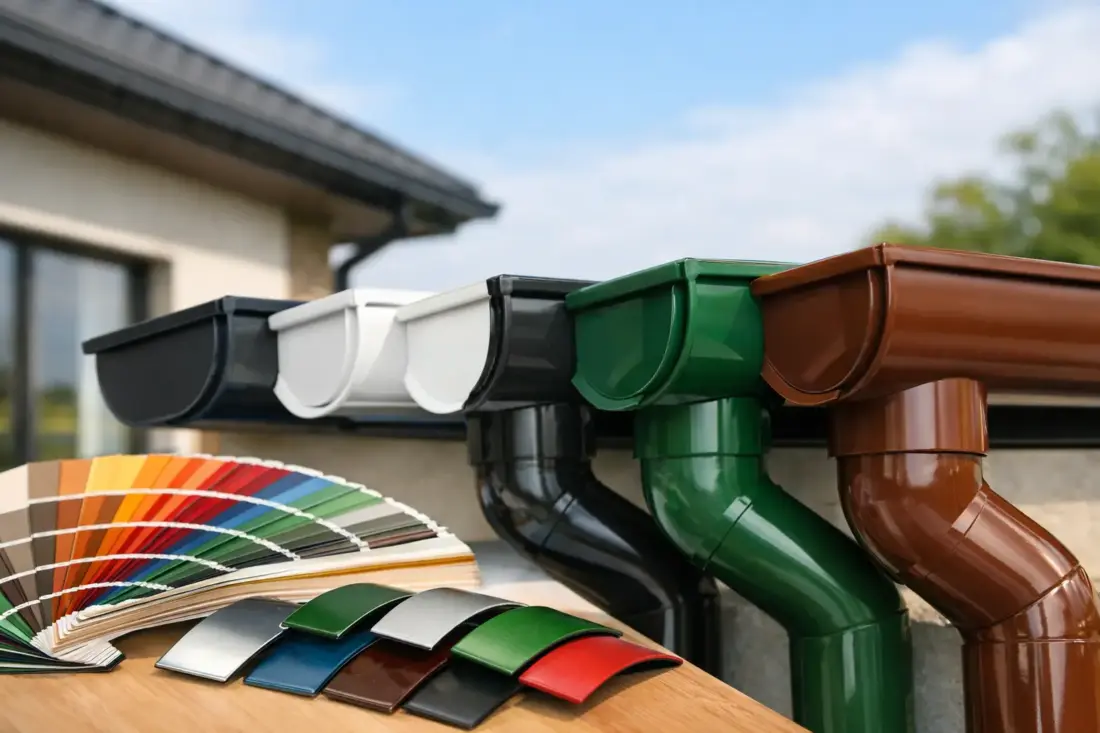
Powder Coated Aluminium Guttering Colours
A black gutter may suit one property perfectly and look out of place on the next. Powder coated aluminium guttering colours should be selected as part of the wider roofline design, not as an afterthought once the gutter profile has been chosen. The right finish can preserve the character of a period façade, sharpen the lines of a contemporary build or help a large commercial rainwater system sit discreetly against the structure.
Aluminium gives you far more freedom than standard off-the-shelf plastic systems. Cast, extruded, pressed and seamless aluminium gutters can be powder coated in a wide range of colours, allowing the gutter, downpipe, hopper head, fascia and coping to work together. The practical question is not simply which colour looks best. It is which colour will suit the building, remain sensible to maintain and be available across every component required.
Why the finish matters as much as the gutter profile
A guttering system is a visible architectural detail. On a detached house, it frames the eaves. On a listed property, the profile and colour can affect whether replacement work retains the original appearance. On commercial elevations, repeated downpipes and large box gutters can become a major part of the visual finish.
Powder coating applies a dry coloured powder to prepared aluminium before it is cured in an oven. The result is an even, durable coating that is bonded to the metal. It provides a consistent finish across components and avoids the regular repainting associated with some traditionally painted rainwater goods.
The colour needs to work with the chosen profile. A deep-flow modern ogee gutter in anthracite grey gives a very different result from a cast aluminium half-round gutter in heritage black. Likewise, a 200mm x 150mm pressed aluminium box gutter is usually specified to blend into a commercial façade or roof edge, rather than draw attention to itself.
Popular powder coated aluminium guttering colours
Black remains a common choice for traditional houses, cottages and heritage-style renovations. It gives cast aluminium gutters, circular downpipes and ornamental hopper heads the familiar appearance of traditional painted cast iron, without the weight and corrosion concerns of iron. A matt or satin black can be especially effective where original rainwater goods were dark painted.
White is often selected for properties with white fascias, rendered walls or a clean contemporary roofline. It can look crisp, but it is less forgiving where dirt from roof surfaces, moss or traffic pollution is likely to show. On exposed locations, a slightly softer off-white or a coordinated light grey may be a more practical specification.
Grey shades are widely used on modern homes and commercial projects. Anthracite grey is frequently matched with aluminium windows, composite doors, cladding and dark roof tiles. It provides a clean contrast against pale render while avoiding the harsher appearance of pure black. Lighter greys can be suitable for industrial units, schools and larger buildings where dark downpipes would stand out too strongly.
Brown is still relevant for properties with timber fascias, brick elevations, clay tiles or rural settings. It can offer a less severe alternative to black and is often appropriate where the owner wants the rainwater system to blend with existing roofline materials.
Green, heritage shades and bespoke colours are useful where the building has a clear architectural requirement. A muted green may suit a country house, while a colour selected to match window frames, steelwork or cladding can give a new-build scheme a properly coordinated finish. Bespoke does not mean arbitrary: the selected colour should be checked against the available gutter brackets, outlets, stop ends, hoppers and downpipes before the order is finalised.
Choosing a colour for the building type
For period properties, start with the original character of the building. Many Victorian, Edwardian and Georgian homes suit black or dark heritage finishes because they replicate the visual weight of cast iron. Cast aluminium guttering is particularly useful where the existing system has a traditional profile, but reduced weight and corrosion resistance are preferred. Decorative hopper heads can be finished to match, so they look like part of the building rather than an added accessory.
Listed buildings require more care. Planning or conservation requirements may dictate profile, size and finish, particularly where existing rainwater goods are being replaced. A colour sample and clear specification are worthwhile before installation. The closest visual match is not always the most fashionable RAL shade, and that is usually the right approach.
For contemporary houses, coordinate the gutter with the elements that have the strongest visual presence. This may be window frames, fascia boards, cladding, roof trim or steel-framed doors. Anthracite grey is popular because it works across these materials, but it is not an automatic answer. A black system can give stronger definition, while a finish matched to pale cladding may make gutters and downpipes much less conspicuous.
For commercial and industrial buildings, the priority is often scale, drainage capacity and long-term serviceability. Large aluminium box gutters and high-capacity downpipes need to perform first, but colour still matters. Matching the gutter to roof-edge flashings, wall panels or façade coatings can make substantial drainage components look planned rather than incidental.
Match the whole rainwater system, not just the gutter
One of the most common specification errors is choosing a gutter colour without considering the full system. A gutter run may look correct at eaves level, but a contrasting downpipe, outlet or hopper head can disrupt the finished elevation.
Specify the colour across the complete visible system: gutter lengths, angles, stop ends, outlets, brackets, downpipes, shoes, offsets and hopper heads. Where wall copings, fascias or soffits are also being supplied in aluminium, a coordinated powder-coated finish can create a far cleaner roofline.
There are occasions when deliberate contrast works. A dark gutter with a lighter downpipe can suit a rendered property where the aim is to reduce the visual impact of vertical pipework. However, this should be a conscious design decision. In most projects, a matched system is the safer and more professional-looking choice.
Gloss level, surface appearance and maintenance
Colour is only part of the finish. Gloss level affects how the system reads from the ground. A matt or low-sheen finish is generally more understated and can suit heritage work, darker colours and contemporary cladding. Satin finishes offer a slight sheen without looking overly reflective. Higher-gloss finishes can be appropriate where they match existing painted joinery, although they tend to show scratches, water marks and surface dirt more readily.
Powder-coated aluminium is low maintenance, not no maintenance. Gutters still need regular clearing to prevent standing water, overflow and staining. The outside surfaces benefit from periodic washing with clean water and a mild detergent where required. Avoid abrasive pads, aggressive solvents and harsh cleaning methods that may damage the coating.
The surrounding environment should also influence the choice. Near busy roads, coastal areas, woodland or industrial sites, dirt and airborne deposits can affect how often a pale finish needs cleaning. Dark colours may hide general grime better, but can show dried mineral marks and dust. Neither option is maintenance-free, so select a colour you are willing to see and look after over the long term.
Specify colour early to avoid delays and mismatched components
Standard colours may be readily available, while bespoke powder coating can add time to a project. This is particularly relevant where cut-to-length gutter runs, unusual profiles, seamless ogee systems or large commercial components are involved. Colour should therefore be agreed before measurements are released for manufacture or before a fitting date is booked.
For larger jobs, provide the gutter profile, size, required lengths, downpipe dimensions, component schedule and chosen colour together. This enables the supplier to confirm that all items can be finished consistently. It also helps prevent a situation where gutters are ordered in one shade and additional brackets or hoppers need to be sourced later in a slightly different finish.
If you are matching existing windows, cladding or roofline products, use the recognised colour reference where possible rather than relying on a photograph. Screens, lighting and weathering can make a colour appear quite different. A physical sample is the most reliable way to judge whether a shade is right against brick, render, slate or timber.
Getting practical support with a colour-led specification
Gutters Direct can advise on suitable aluminium profiles, component requirements and powder-coated finishes for supply-only, cut-and-drop or installation projects. This is especially useful when a traditional cast system needs to meet a heritage brief, or when a high-capacity modern gutter must match a commercial façade.
A well-chosen colour does more than improve kerb appeal. It makes the rainwater system look properly considered, while the aluminium underneath delivers the low weight, corrosion resistance and long service life the building needs. Choose the finish alongside the profile and drainage capacity, and the completed roofline will look right from the first rainfall onward.