

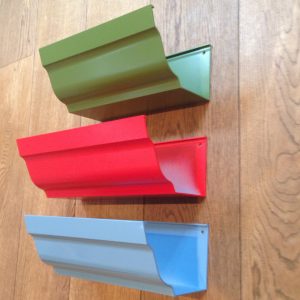
Powder Coated Gutters for Lasting Colour
A rainwater system is often one of the first details visible from the street. The right profile can suit a listed cottage, sharpen the lines of a new build or carry high volumes from a commercial roof. Powder coated gutters add another practical advantage: a durable factory-applied finish in a colour selected to work with the roof, windows, fascias and external joinery.
For property owners and contractors, the benefit is not simply appearance. Powder coating protects aluminium from weathering while retaining the material’s low weight, corrosion resistance and long service life. The best result comes from specifying the gutter profile, outlet capacity, downpipe arrangement and finish as one system rather than treating colour as an afterthought.
What are powder coated gutters?
Powder coated gutters are aluminium gutters that have been finished with a dry powder coating before delivery or installation. The aluminium is prepared, the powder is applied electrostatically and the coating is cured under heat to form an even, bonded finish. Unlike site-applied paint, a properly applied powder-coated finish is consistent across gutter lengths, stop ends, outlets, brackets, downpipes and hopper heads.
Aluminium is particularly well suited to this process. It does not rust in the way steel can, and it accepts a broad choice of polyester powder-coated colours. That makes it possible to specify anything from traditional black, heritage green and anthracite grey to a bespoke RAL colour for a coordinated architectural finish.
The coating does not make an incorrectly designed gutter system perform better. Capacity still depends on the gutter profile, its fall, roof area, outlet positions and the number and size of downpipes. However, it gives a correctly specified aluminium system a finish that is both hard-wearing and straightforward to maintain.
Why colour choice matters on a rainwater system
Black remains a popular choice for period buildings because it closely reflects the appearance of traditional cast iron. On a Victorian terrace, country property or conservation project, black powder coated cast aluminium gutters can provide the required heritage character without the weight and regular repainting associated with cast iron.
Modern projects often take a different approach. Anthracite grey is commonly selected to match aluminium windows, composite doors and contemporary roof finishes. White, brown and dark bronze may suit particular fascias or cladding systems, while a bespoke colour can allow gutters and downpipes to become a deliberate part of the elevation rather than an unavoidable visual interruption.
It is worth considering how the colour will look in context. A near-match to window frames can create a clean, continuous appearance, but a contrasting finish may better define rooflines on larger buildings. On rendered elevations, dark downpipes are usually more noticeable than the gutter itself. On brickwork, a carefully chosen colour can either blend with mortar tones or provide a clear architectural detail.
For extensions and phased developments, record the RAL reference and finish level at the specification stage. This makes later additions, replacement sections and extra downpipes far easier to match.
Choosing the right aluminium gutter profile
The profile should be selected for the building and rainfall demand before the finish is chosen. Decorative cast aluminium half-round and ogee profiles are appropriate where traditional proportions matter. They are available with matching rise-and-fall brackets, fascia brackets, sockets and ornamental hopper heads to suit older properties.
Extruded aluminium guttering offers crisp, consistent lines and is a practical option for residential and commercial work. Seamless ogee systems are formed in continuous lengths on site, reducing the number of joints along long elevations. Fewer joints can mean fewer potential leak points, provided outlets, corners and stop ends are fitted and sealed correctly.
Pressed aluminium box gutters are often specified where capacity and clean modern detailing are priorities. They suit contemporary homes, blocks of flats, schools, retail units and other commercial buildings, particularly where roof areas are large or water needs to be directed to planned outlet locations. A 200mm x 150mm box gutter, for example, is a very different drainage solution from a domestic half-round profile and should be assessed accordingly.
Downpipes are equally important. A system can only discharge as effectively as its outlets and downpipes allow. Round, square and rectangular aluminium downpipes can be matched to the gutter style, while swaged ends may simplify jointing. On schools, public buildings or exposed service areas, anti-vandal downpipe arrangements may also be worth considering.
Specify the finish alongside the components
A powder-coated system should be ordered as a coordinated set. Gutter lengths, union brackets, angles, stop ends, running outlets, downpipes, shoes, clips and hopper heads should all be supplied in the same specified finish wherever possible. Mixing components from different ranges or suppliers can lead to small but noticeable differences in sheen or shade.
The finish itself is not only a question of colour. Gloss level affects the final look. A matt or satin coating can suit contemporary architecture and reduce visible surface marks, while a glossier finish may be more in keeping with traditional painted rainwater goods. The best option depends on the building’s materials, its exposure and the intended visual character.
For projects where colour matching is critical, provide the RAL reference rather than relying on a verbal description such as “grey” or “black”. There are many variations within those colour families. If the system needs to match existing aluminium windows, cladding or balustrades, confirm the reference and sheen before manufacture.
Bespoke powder coating can add to lead time compared with stock black or standard colours, so it should be discussed early. This is especially relevant where fascias, soffits, copings and rainwater goods all need to arrive together for a programmed installation.
Installation details that protect the finish
Powder coating is durable, but it should still be handled properly on site. Store gutter lengths on protected bearers rather than directly on rough ground, and avoid dragging components across each other. Any protective wrapping should remain in place until fitting where practical, particularly on busy building sites.
Set out the gutter fall carefully before brackets are fixed. Gutters need enough fall towards outlets to drain efficiently, but excessive fall can look poor along a long fascia line. Bracket spacing should follow the system guidance and take account of local exposure, snow loading and the weight of water in the gutter.
Cutting is sometimes unavoidable, especially around corners and outlet positions. Use suitable cutting equipment and remove swarf immediately. Metal filings left on a finished surface can stain and may damage the coating over time. Fresh cut edges should be clean and concealed within joints or treated in accordance with the system manufacturer’s recommendations.
Use the correct fixings for the substrate, whether that is timber fascia, masonry, steelwork or a proprietary roof edge detail. Fasteners should be suitable for use with aluminium and external exposure. Poorly selected dissimilar metals can create corrosion risks, particularly where water is repeatedly present.
For supply-only projects, accurate measurements, photographs and a simple elevation sketch help avoid missing items. For more complex work, a cut-and-drop service or professional fitting support can reduce site waste and keep longer runs, corners and outlet positions properly coordinated. Gutters Direct can assist with aluminium profile selection, powder-coated finishes and installation options where a complete rainwater solution is required.
Cleaning and maintaining powder-coated aluminium
One of the main attractions of powder-coated aluminium is that it does not need routine repainting. It is not maintenance-free, though. Leaves, moss and silt should be cleared from gutters regularly so that standing water does not build up around outlets and joints. Properties below trees may need attention more often, particularly in autumn.
Wash exposed surfaces periodically with clean water and a mild, non-abrasive detergent. This is useful on coastal properties, near busy roads and in industrial locations where airborne salts or pollutants can settle on the coating. Avoid harsh solvents, abrasive pads and aggressive cleaners, as these can dull or damage the finish.
Check brackets, unions, outlets and downpipe clips during cleaning. A minor alignment issue or blocked shoe is easier to address before water begins overflowing onto brickwork, render or entrances. If the coating is scratched during building works, deal with it promptly using an appropriate touch-up method rather than leaving bare damage exposed.
Cost, lifespan and the practical trade-off
Powder-coated aluminium usually costs more at the outset than basic plastic rainwater goods. It can also require more careful specification because the system is chosen around profile, capacity, finish and component compatibility. Those are worthwhile considerations on projects where appearance, durability and long-term maintenance matter.
Against that initial spend, aluminium is light to handle, does not rust and can provide a far more convincing alternative to painted cast iron on heritage work. On modern schemes, it offers cleaner lines, longer component lengths and a better opportunity to match the rest of the building envelope. The value is strongest when the system is sized correctly and installed once, rather than repeatedly repaired or replaced.
Before ordering, confirm the roof drainage requirement, gutter profile, outlet locations, downpipe size, bracket type, RAL colour and required delivery format. With those details settled early, powder coated gutters can provide a rainwater system that looks right on day one and continues to perform through many British winters.