
Best Downpipe Materials for Homes in Britain
A downpipe is easy to overlook until it leaks, stains a wall or fails to cope with a heavy downpour. Choosing the best downpipe materials homes need is not simply a question of appearance. The right choice must suit the building, gutter capacity, local exposure, maintenance expectations and the finish required at eaves level.
For many UK projects, aluminium provides the strongest balance of lifespan, low weight and architectural flexibility. That does not make it the automatic answer for every property. Cast iron remains appropriate for certain heritage schemes, while uPVC can be a sensible budget-led option for a straightforward replacement. The detail lies in matching the material to the job rather than selecting on purchase price alone.
What a domestic downpipe must do
A downpipe carries collected roof water from the gutter outlet to a drain, gully or surface-water system. Its size and material matter because a restriction at this point can cause gutters to overflow, particularly on larger roofs, steep pitches or exposed elevations.
Material selection should start with the gutter profile and outlet size. A half-round gutter on a small terrace will not need the same capacity as a deep-flow ogee, a pressed aluminium box gutter or a system serving a large detached home. The downpipe should also look proportionate. An undersized pipe can appear mean against a substantial fascia, while an oversized modern pipe may jar with a period elevation.
Durability is equally practical. Downpipes sit close to the ground, where they face impact from bins, garden equipment and foot traffic, as well as splashing water and debris. A suitable material needs to withstand these conditions without demanding constant repainting or replacement.
Best downpipe materials for homes: the main options
Aluminium downpipes
Aluminium downpipes are a strong all-round choice for traditional renovations, self-builds and contemporary homes. Aluminium is naturally corrosion resistant, lightweight and well suited to UK rainfall. It will not rust in the way unprotected steel can, and it does not become brittle with age as some plastic systems may.
Extruded aluminium downpipes have clean, consistent lines and are commonly selected for modern residential work. They are available in round and rectangular forms, allowing the system to complement either a traditional gutter profile or a crisp contemporary elevation. Swaged joints can provide a neat, practical connection between lengths, and standard components make planned installation straightforward.
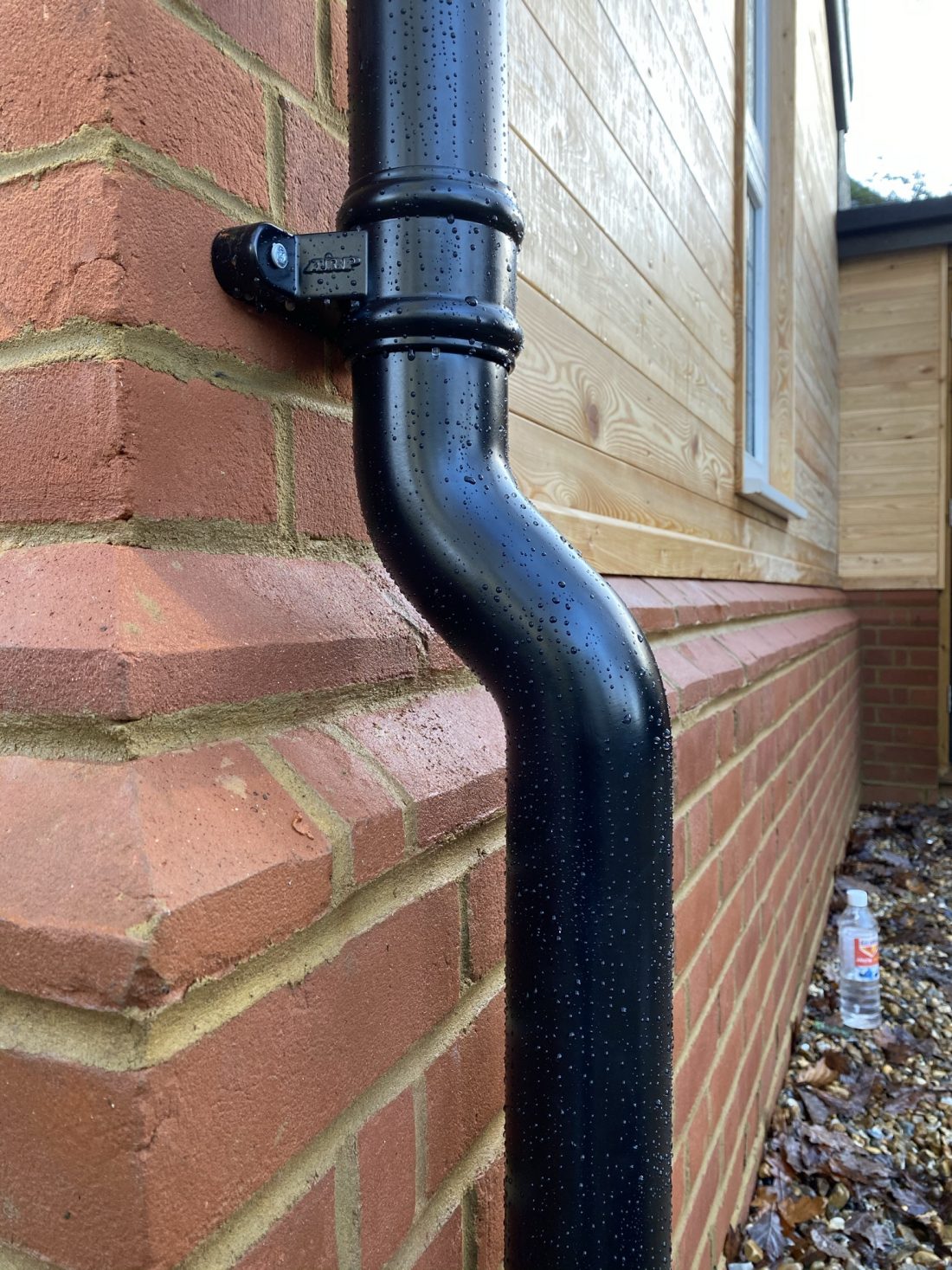
Cast aluminium downpipes offer more visual weight and are particularly effective beside cast aluminium gutters, decorative brackets and ornamental hopper heads. They recreate the depth and character associated with traditional cast iron rainwater systems, but at a significantly lower weight. This can reduce handling difficulties during fitting and place less demand on older fabric.
Powder coating is one of aluminium’s major advantages. Downpipes can be supplied in a selected colour to coordinate with windows, fascias, cladding or guttering. Black remains popular for heritage properties, while anthracite grey, white and bespoke RAL colours give greater control on modern schemes. A factory-applied finish also avoids the regular painting cycle normally associated with bare cast iron.
There are trade-offs. Aluminium costs more initially than basic uPVC, and care is needed to specify compatible outlets, offsets, clips and shoes. It is also worth considering the location of low-level sections. Where impact is likely, a more protected layout or anti vandal arrangement may be appropriate.
Cast iron downpipes
Cast iron is the traditional benchmark for period buildings. Its substantial profile, crisp detail and long-established appearance make it the obvious choice where planning requirements, conservation guidance or architectural integrity call for authentic materials. On a listed property, the rainwater system is part of the elevation rather than a minor service item.
The main benefit is character. Cast iron has a depth and solidity that suits Victorian, Georgian and Edwardian homes, particularly when paired with deep gutters and detailed hopper heads. It can last for decades when correctly prepared, painted and maintained.
Its limitations are weight and upkeep. Cast iron requires more care during transport and installation, particularly around old masonry and high-level working. Painted surfaces need inspection, as damaged coatings can allow rust to form. This is not necessarily a reason to avoid it, but it should be an informed maintenance commitment rather than an afterthought.
For homeowners seeking the cast appearance without the same weight or ongoing repainting requirement, cast aluminium is often the practical alternative. It can retain the appropriate visual language while providing corrosion resistance and a durable powder-coated finish.
uPVC downpipes
uPVC downpipes remain common because they are inexpensive, light and widely available. They are quick to cut on site, simple to handle and often suitable for smaller homes, extensions, garages and cost-sensitive replacement work. For a standard white system on an unobtrusive rear elevation, uPVC can do the job adequately.
However, it is not always the best long-term or visual choice. Plastic can fade, discolour and become more vulnerable to cracking over time, especially where it is exposed to strong sunlight, repeated cold weather or accidental knocks. Dark-coloured plastic systems can also show scuffs and expansion movement more readily.
The range of finishes and profiles is more limited than powder-coated aluminium, and uPVC rarely gives the right result on a heritage façade or a high-specification new build. It can be sensible where budget is the overriding factor, but it should be assessed against the likely replacement cycle rather than the initial cost alone.
Steel and galvanised steel downpipes
Steel downpipes are strong and can suit industrial-style buildings, agricultural structures and some commercial applications. Galvanised coatings provide initial corrosion protection, and steel can resist physical impact well where a downpipe is exposed at ground level.
For domestic projects, though, steel demands careful specification. Cut edges, scratches and poorly maintained coatings can become corrosion points. It is heavier than aluminium and generally offers less freedom for colour-matched, decorative residential rainwater systems. Where a property needs a long-life, colour-coordinated finish without the maintenance burden of steel, aluminium is usually the more straightforward route.
Copper is another premium material occasionally used on high-end or specialist projects. It develops a natural patina and has considerable visual appeal, but its cost and distinctive appearance mean it is a niche choice rather than a standard domestic solution.
Match the downpipe to the building style
Material should support the architecture rather than compete with it. A rendered new-build with aluminium windows may benefit from square or rectangular extruded aluminium downpipes in a matching powder-coated colour. The vertical lines can be kept sharp and understated, particularly when used with seamless ogee guttering or a modern box-gutter arrangement.
A period property needs a different approach. Round cast aluminium downpipes, traditional ears and a properly proportioned hopper head can give the building the visual presence of cast iron without creating unnecessary weight. On listed or conservation-sensitive work, confirm the required material and profile before ordering, as local requirements can vary.
For extensions, it is worth considering the old and new elevations together. A low-cost plastic downpipe on a new rear addition may appear disconnected from an existing cast or aluminium system. Matching the colour and general profile usually produces a more considered finish.
Capacity, size and installation details matter
The best material cannot compensate for inadequate capacity. Downpipe diameter or rectangular dimensions should be selected alongside roof area, gutter size, outlet arrangement and the number of drainage points. Larger roof planes may need more than one outlet and downpipe, rather than one oversized pipe expected to handle the full flow.
Positioning also affects performance. Keep runs as direct as possible, use offsets only where required, and ensure joints are correctly orientated to shed water downwards. Clips should be fixed securely at suitable centres for the material and pipe profile, with particular attention around offsets, shoes and ground-level sections.
At the base of the system, make sure water is directed into an appropriate gully or drainage connection. A shoe discharging against a wall, paving or poorly drained ground can create damp and staining even when the guttering itself is functioning correctly.
When specifying aluminium, use a complete compatible system. This includes outlets, stop ends, bends, clips, swaged connections and fixings designed for the chosen profile. A supply-only order can work well for experienced installers, while cut-and-drop or professional fitting support can reduce site waste and help keep complex elevations on schedule.
Think beyond the initial price
A cheap replacement can be expensive if it needs repeated attention. Compare the expected service life, repainting requirement, resistance to corrosion, colour retention and likelihood of accidental damage. For a home being renovated for the long term, these factors often make aluminium more economical over its working life than the initial material price suggests.
Gutters Direct supplies aluminium downpipes and matching rainwater components across traditional, extruded and commercial-scale systems, with standard and bespoke powder-coated finishes available. That breadth is useful when a project requires a practical drainage solution without compromising the character of the building.
The most reliable choice is the one that fits the roof’s drainage demand, the property’s architecture and the level of maintenance the owner is genuinely prepared to undertake. Specify those three points first, and the right downpipe material becomes far easier to identify.