

Box Gutters Versus Ogee Gutters Compared
A gutter profile can change both the look of a roofline and its ability to cope with heavy rainfall. When comparing box gutters versus ogee gutters, the right choice is rarely just a matter of appearance. Roof area, outlet positions, building style, required flow rate and how visible the system will be all need to be considered before ordering lengths, angles and downpipes.
For many UK projects, aluminium provides the practical foundation whichever profile is selected. It is lightweight, corrosion-resistant and available in a wide range of powder-coated colours. The key is specifying a profile that suits the building and gives rainwater a reliable route from roof to drainage point.
What is an ogee gutter?
An ogee gutter has a shaped front edge, usually with a distinctive double curve that gives the profile its familiar moulded appearance. It is often called a modern ogee profile because it offers more capacity than a basic half-round gutter while retaining a traditional, decorative outline.
Ogee is a popular choice for domestic properties, extensions and renovation work because it sits comfortably on many elevations. It can look appropriate on a Victorian or Edwardian-style home when paired with a suitable cast aluminium hopper and round downpipe, but it can also work on newer housing where a more detailed roofline is wanted.
Extruded aluminium ogee systems are particularly useful where straight, consistent lengths and a neat finish are required. Seamless ogee guttering can also be formed on site in continuous runs, reducing the number of joints along long eaves. Fewer joints can mean fewer potential leakage points, provided outlets, stop ends and corners are installed correctly.
The shaped front is not solely decorative. The profile can provide useful water-carrying capacity, but capacity must never be judged by appearance alone. A long roof slope, a steep pitch or an exposed location can produce significant flow during a downpour. Downpipe sizes and outlet numbers matter as much as the gutter section.
What is a box gutter?
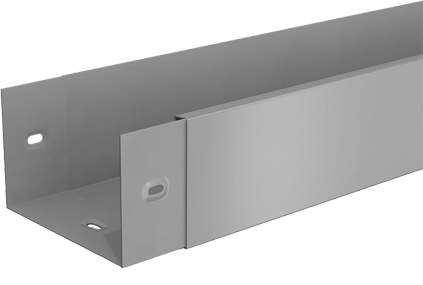
A box gutter has a square or rectangular section with clean, straight lines. In aluminium rainwater systems, it may be supplied as a visible pressed aluminium gutter fixed at the eaves, or it may form part of a more concealed drainage arrangement within the roof design. These are different applications, even though both are commonly described as box gutters.
For external use, a pressed aluminium box gutter is often selected for contemporary houses, blocks of flats, schools, retail units and commercial buildings. Its uncluttered profile works well with modern fascias, parapets and flat-looking rooflines. Larger commercial sections, including 200mm x 150mm box gutter options, are designed for projects where standard domestic profiles may not offer enough capacity.
A concealed box gutter needs particularly careful design. It is positioned within or behind the roof edge rather than mounted visibly along the fascia, so access for cleaning, adequate falls, emergency overflows and waterproofing details become critical. If it blocks or overtops, the resulting water ingress can be more serious than an overflow from an exposed eaves gutter.
That does not make concealed box gutters unsuitable. They are often the correct architectural solution for contemporary projects. It simply means they should be sized and detailed as a drainage component, not treated as an invisible finishing item.
Box gutters versus ogee gutters: appearance and architectural fit
Ogee gutters make a visible feature of the roofline. Their moulded face adds shadow and definition, which can soften the transition between roof and wall. This is often useful on period properties, traditional elevations and homes with decorative brickwork, timber fascias or heritage-style rainwater goods.
Box gutters are more restrained. Their straight edges suit buildings with aluminium windows, crisp fascias, rendered elevations and minimal detailing. A square downpipe can reinforce that contemporary appearance, while a round downpipe can be used where the rest of the scheme calls for a softer visual contrast.
Neither profile is automatically better for a listed building or conservation setting. The existing detail, planning requirements and the building’s original rainwater arrangement should guide the decision. In some cases, a cast aluminium profile with ornamental hopper heads will be the appropriate route. In others, a discreet colour-matched aluminium box gutter may better preserve a clean parapet line.
Powder coating gives more flexibility than the usual black, white or anthracite grey choices. Matching the gutter to windows, cladding, fascias or roof-edge trims can make a substantial difference, particularly on bespoke self-builds and commercial refurbishments.
Capacity is about the complete drainage design
A deeper or wider gutter generally carries more water, but a profile cannot be selected on that basis alone. Effective capacity depends on the roof catchment area, local rainfall intensity, roof pitch, gutter fall, outlet size, downpipe diameter and the distance water has to travel before it reaches an outlet.
A long gutter run with one outlet at the far end may struggle even if the gutter itself appears generously sized. Adding outlets or downpipes can reduce the travel distance and improve performance. Conversely, fitting a large box gutter to an undersized downpipe simply moves the restriction further down the system.
Commercial roofs and large domestic roofs frequently justify box gutters because their dimensions can be specified for higher flows. However, modern ogee profiles are also available in larger sections and can be an effective answer where visual character matters alongside capacity. The specification should be based on the roof rather than a preference for one profile name.
It is also worth allowing for debris. Valleys, nearby trees and mossy roof coverings place more demand on any gutter. Leaf guards may help in the right situation, but they do not remove the need for safe, routine inspection and cleaning.
Fitting and maintenance considerations
External ogee and box gutter systems are generally straightforward to access from suitable scaffolding or access equipment. Brackets must be correctly spaced for the profile, securely fixed to sound fascia or supporting structure, and set to the required fall towards the outlet. Aluminium components should be handled carefully to protect the factory or bespoke powder-coated finish.
Pressed aluminium box gutters are usually supplied in manageable sections with compatible corners, unions, outlets and stop ends. Their linear form can simplify setting out on long elevations, although corners and changes in level still need accurate measurement. Ogee systems need the same care at joints and outlets, especially where a seamless run meets a fabricated fitting.
Concealed box gutters require more planning than surface-fixed systems. There must be accessible points for clearing leaves and silt, properly formed falls with no low spots, and an overflow strategy that directs excess water outside rather than into the building fabric. These details should be agreed before roof coverings and fascias make alterations difficult.
Maintenance is not a reason to avoid either exposed profile. Both benefit from periodic clearing and checks after severe weather. The main difference is consequence: a visible gutter usually gives clearer warning when it is overflowing, while a hidden internal gutter can conceal a developing issue. Where a box gutter is concealed, access provisions are part of good design rather than an optional extra.
Cost, lead time and long-term value
The installed cost depends on more than the metre rate of gutter. Large-capacity profiles, bespoke corners, unusual angles, scaffold access, outlet arrangements, downpipe runs and powder-coated finishes all affect the final figure. A system with fewer joints may reduce fitting time, while a more complex roofline may require additional fabricated components.
Aluminium has a higher initial cost than some plastic alternatives, but it offers strong long-term value where appearance, colour retention and corrosion resistance matter. It is also considerably lighter than cast iron while allowing traditional cast aluminium profiles to be used on heritage projects.
For a straightforward domestic replacement, a standard ogee system may offer an efficient balance of capacity, appearance and availability. For a large roof, a contemporary façade or a commercial drainage requirement, a pressed aluminium box gutter may be the more practical specification. Gutters Direct Online can supply standard components, cut-and-drop materials or fitting support where a project needs a complete aluminium rainwater solution.
Choosing the right profile for the job
Start with the roof plan rather than the elevation. Establish the roof area draining to each run, the available locations for outlets and downpipes, and whether the gutter will be visible, concealed or integrated with a parapet. Then consider the architectural finish and colour.
Choose ogee when the building benefits from a shaped, more traditional roofline and the calculated drainage requirement is within the capacity of the selected system. Choose a box gutter when clean lines, higher volume handling or commercial-scale dimensions are needed. If the gutter will be concealed, give access, fall and overflow details the same attention as the roof covering itself.
The best rainwater system is one that suits the building, carries water away without drama and remains straightforward to inspect years after installation.