

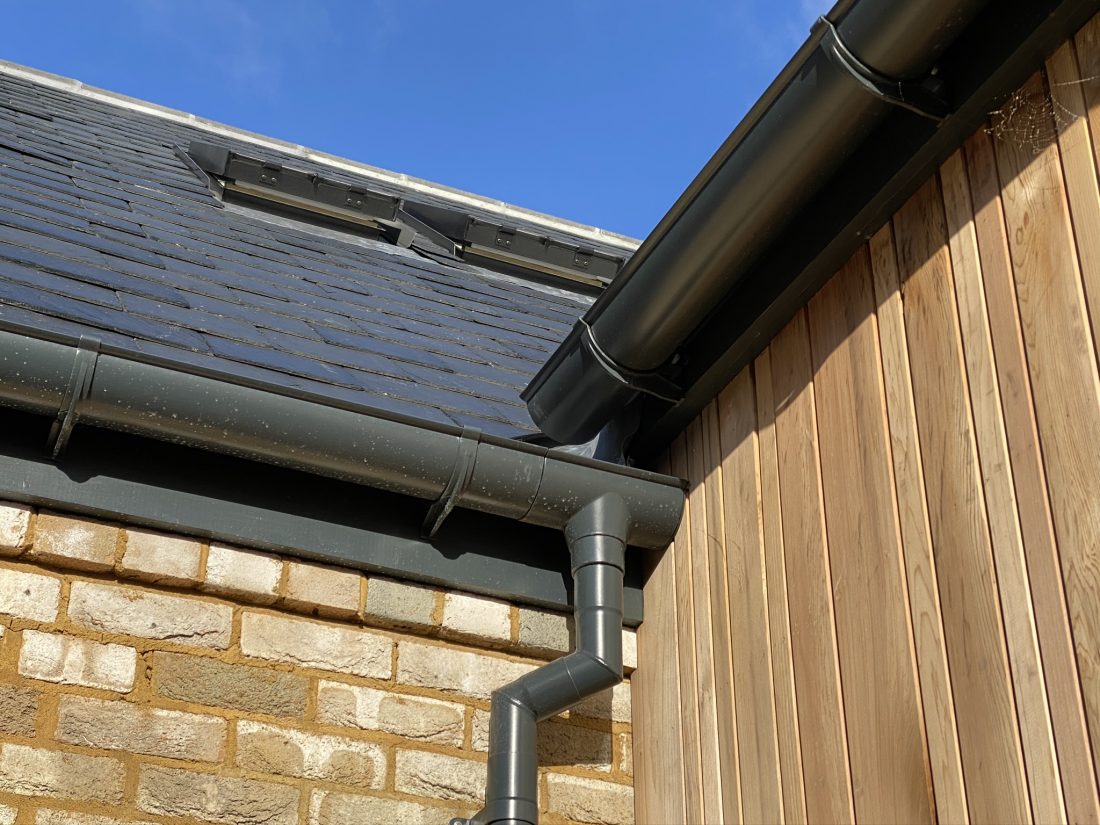
Best Roofline Products for Extensions Explained
An extension roof is where old and new elevations meet, and the roofline has to make that junction look intentional. The best roofline products for extensions do more than finish the eaves: they collect water reliably, protect the new structure and give the addition a proportionate, colour-matched appearance. Choosing them early avoids the familiar last-minute problem of trying to match a gutter profile, downpipe position or fascia colour after the roof has been fitted.
For most UK projects, aluminium is a strong starting point. It is light, corrosion-resistant and available in profiles that suit both traditional brick extensions and sharply detailed contemporary work. It also offers far more finish flexibility than standard white plastic systems, particularly where the extension must complement existing windows, masonry or roof details.
Start with the roof design, not the gutter colour
A rear kitchen extension, a single-storey side return and a large flat-roof addition can all require very different rainwater arrangements. Roof area, pitch, outlet locations and the way water runs towards a junction determine the gutter capacity needed. A neat-looking system that is too small will overflow in heavy rainfall, staining walls and soaking the area around doors, paving and foundations.
Assess the extension roof as a drainage layout rather than as a collection of separate products. Establish where the water will discharge, whether the existing drain can take the additional flow, and whether a new downpipe is preferable to connecting into an old one. On a long extension, placing downpipes only at one end can make a shallow fall difficult to achieve and may leave the gutter working harder than it should.
The roof covering matters too. A pitched slate or tile roof will often suit a conventional eaves gutter, while a flat roof with a parapet may call for a box gutter, coping and internal or external outlets. If the proposed extension sits below an existing roof valley, allow for the concentrated discharge from the higher roof. This is one of the situations where profile size and outlet capacity should be checked by a knowledgeable supplier or installer rather than selected purely by appearance.
Aluminium guttering for extension roofs
Ogee and half-round profiles for domestic extensions
Extruded aluminium ogee guttering is a practical choice for many domestic extensions. Its shaped front edge provides a traditional gutter appearance, but it works equally well against modern render, brick or timber cladding when finished in a selected powder-coated colour. It is particularly useful where the extension needs to pick up the visual language of an existing house without copying every original detail.
Half-round aluminium guttering has a simpler profile and can be the better fit for restrained, contemporary elevations. It is also a sensible option when matching an existing half-round system on the main property. The key is to match capacity as well as shape. A small domestic profile may be adequate for a compact porch or bay extension, but a deeper or wider profile is often more suitable for broad roof spans and exposed sites.
Continuous seamless ogee systems deserve consideration where the extension has a long, uninterrupted eaves run. Formed to length, they reduce the number of joints along the gutter line. Fewer joints can mean fewer potential leakage points, although outlets, stop ends and corners still need careful fitting. A seamless run is most effective when the fascia line is straight and access allows the system to be formed and installed properly.
Pressed box gutters for flat roofs and parapets
Pressed aluminium box gutters are often the more appropriate roofline product for flat-roof extensions, concealed drainage arrangements and contemporary parapet details. Their clean lines suit modern architecture, while their capacity can be specified to handle larger catchment areas. They may sit behind a parapet or form a visible feature where the roof design calls for a crisp, square edge.
Box gutters need particular attention at outlets, corners and roof-to-wall abutments. A box gutter is not simply a square version of an eaves gutter: it is part of the roof drainage design. Check that its dimensions, falls and outlet positions work with the waterproofing system and that there is suitable provision for maintenance. Leaves, moss and construction debris can gather in concealed channels, so accessible cleaning points are worth allowing for.
Fascias, soffits and copings complete the edge
Guttering performs best when it is fixed to a sound, straight fascia. On a new extension, aluminium fascia boards offer a durable, low-maintenance finish with clean shadow lines. They are available in colours selected to coordinate with gutters, downpipes, window frames and roof trims. This is particularly valuable where a dark grey or black roofline is wanted without relying on mixed materials from different suppliers.
Soffits close the underside of the eaves and give the roof edge a finished appearance. Their depth should suit the roof construction rather than being chosen as a purely decorative strip. Where ventilation is required, the detail needs to be designed around the roof build-up. Do not block ventilation paths simply to achieve a flush-looking soffit line.
For parapet extensions, wall copings are an important finishing component. Aluminium copings protect the top of the wall from weathering and direct water away from the face of the masonry or render. They should have appropriate drips and properly formed joints, especially where the parapet turns corners or changes height. A coping that looks correct from ground level can still create staining problems if water tracks back beneath its edge.
Downpipes and hopper heads need a clear purpose
Downpipes are commonly treated as an afterthought, yet they have a major influence on both drainage performance and the finished elevation. Aluminium downpipes are available in round and rectangular forms, allowing the system to suit the property style and the available wall space. Rectangular pipes can work well on contemporary extensions with sharp lines; round pipes often sit more naturally alongside traditional detailing.
Choose the downpipe location with the extension layout in mind. A pipe in the middle of a glazed rear elevation can interrupt a carefully planned view, while one tucked at a return may be less noticeable and easier to connect to drainage. However, the least visible position is not always the best hydraulic option. Long gutter runs, roof valleys and large areas of impermeable roofing may justify more than one outlet.
Hopper heads can be useful where several gutter runs meet or where a downpipe receives water from an upper roof and the new extension below. On period properties, a cast aluminium hopper head can also provide a convincing heritage detail without the weight and maintenance demands of traditional cast iron. For a minimalist extension, a simple outlet and matching downpipe may be the more appropriate choice.
Matching a new extension to an existing property
The most successful extension rooflines do not necessarily copy the original house exactly. A Victorian property with cast aluminium gutters may benefit from a matching cast profile on a visible side extension, particularly where the work is subject to listed-building considerations. At the rear, a simpler aluminium system may be acceptable if it is less prominent and suits the extension architecture.
Colour is where an aluminium system provides real control. Powder coating allows gutters, fascias, soffits, copings and downpipes to be coordinated across the project. Black, anthracite grey and heritage shades are popular, but the right finish depends on the roof covering, brickwork and window colour. A dark gutter can look precise against pale render, while a softer tone may sit better against aged stone or traditional brick.
Avoid selecting products on colour alone. Profile proportions matter. An oversized commercial-style box gutter can overpower a modest single-storey extension, while a narrow domestic gutter can look under-specified beneath a deep roof overhang. Measure the visible eaves depth and consider the building from normal viewing positions, not just from a close-up sample board.
Installation details that protect the investment
Even high-quality aluminium roofline products rely on correct installation. Gutter brackets must be set at suitable centres and fixed into a sound substrate. Falls should direct water towards the outlet without creating an obvious slope along the fascia. Joints, unions and stop ends need the specified seals and fixings, rather than improvised substitutes.
Allow for access. Downpipes should be positioned so they can be cleared and inspected, and gutters should not be hidden behind a roof detail that makes basic maintenance impossible. Where extensions sit close to boundaries, think about the practicalities of fitting and future cleaning before committing to an arrangement that requires access from a neighbour’s land.
It is also worth deciding early whether the project needs supply only, cut-and-drop materials or a fitting service. Gutters Direct Online can help identify appropriate aluminium profiles, finishes and associated components for projects ranging from compact residential extensions to larger commercial additions. Having dimensions, roof plans and photographs of the existing elevation ready will make that conversation more productive.
A well-chosen roofline should let the extension handle a downpour without calling attention to itself. Give the drainage route, profile size and finish the same consideration as the roof covering, and the new work will look settled from the first day rather than like an add-on waiting to be corrected.