

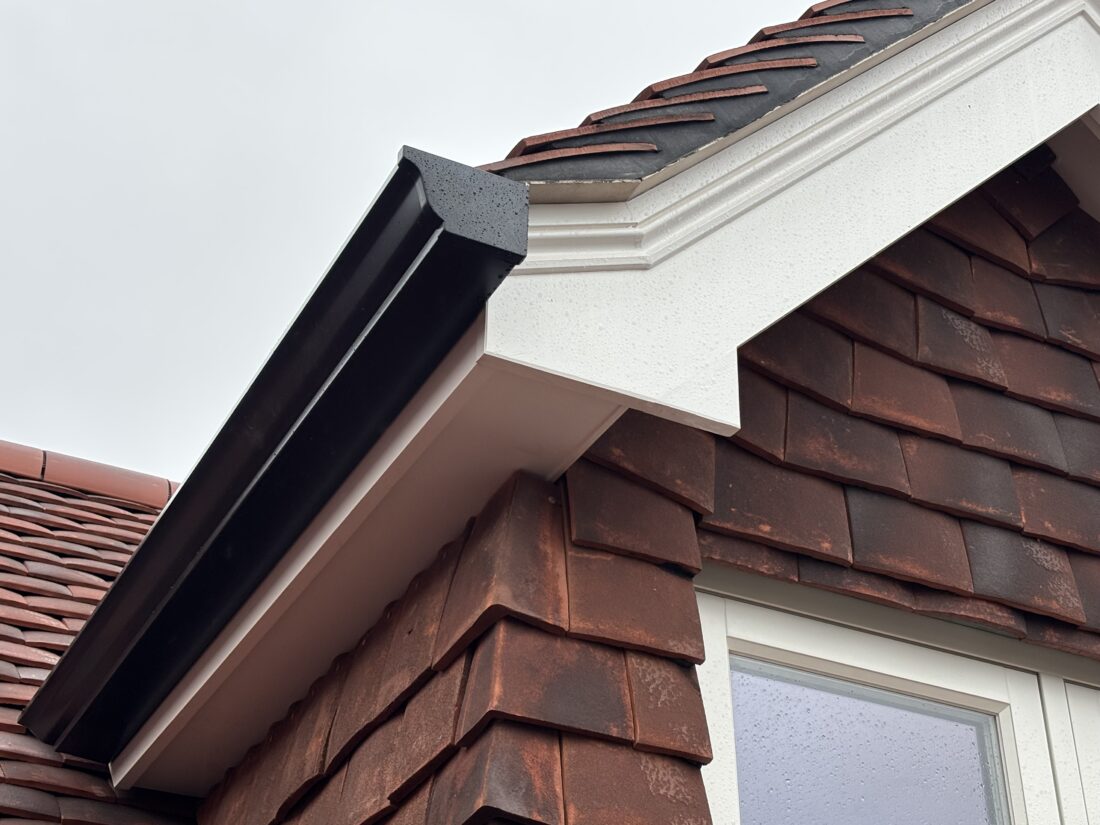
Gutter Expansion Joint Guide for Aluminium Systems
Aluminium guttering is light, durable and well suited to long roof elevations, but it moves as temperatures change. A correctly planned gutter expansion joint guide is therefore not an optional extra for larger runs. It is part of preventing cracked seals, bowed gutter lengths, pulled-out fixings and water escaping at joints.
The requirement is most relevant to extruded aluminium, pressed aluminium box gutters and continuous seamless systems on exposed elevations. Cast aluminium gutters are generally supplied in shorter sections, so movement is spread across more joints, but the system still needs to be installed to the profile manufacturer’s fixing and jointing details.
What a gutter expansion joint does
An expansion joint creates a controlled point where two gutter lengths can move independently. Rather than locking the entire run rigidly together, the joint allows thermal movement while maintaining a watertight channel for rainwater.
Aluminium expands and contracts more noticeably than many people expect. A long black or dark-coloured gutter on a south-facing wall can become significantly warmer than the surrounding air in direct sun, while a frosty night produces the reverse effect. Over several metres, even modest movement can place strain on sealant, bolt holes, stop ends, outlets and fascia brackets.
An expansion joint is not simply a gap filled with mastic. Proper systems use a purpose-made expansion piece, sliding joint or movement detail designed for the relevant gutter profile. The arrangement normally includes flexible seals and a defined allowance for movement. It must be fitted in the correct orientation so water flows over, rather than into, the joint.
When aluminium gutters need movement joints
There is no universal distance that applies to every aluminium gutter. Profile depth, material thickness, colour, local exposure, fixing method and the manufacturer’s jointing instructions all affect the layout. As a practical rule, the longer and more exposed the run, the more carefully movement needs to be considered.
Extruded gutters are commonly supplied in longer lengths than cast sections, making expansion detailing particularly important. Pressed aluminium box gutters on commercial buildings may also cover wide elevations with relatively few joints. These installations should be set out before the first bracket is fixed, not adjusted after the gutter is already under tension.
Movement joints are often needed where a continuous run exceeds the maximum length permitted by the system manufacturer. They may also be appropriate where a gutter changes direction, meets a fixed outlet position, runs across separate building elements or is interrupted by an expansion joint in the structure itself.
Do not assume that a union joint automatically performs as an expansion joint. A standard union may be intended to create a fixed, sealed connection only. Using it where a sliding movement detail is required can lead to seal failure or distortion as the seasons change.
Dark finishes and exposed elevations
Powder-coated aluminium is available in a wide choice of colours, including anthracite grey, black and heritage shades. The finish does not change the quality of the aluminium, but darker colours can absorb more heat in sunny conditions. On long south- or west-facing elevations, that extra temperature range should be allowed for during design.
Coastal and high-level sites create a different challenge. Wind-driven rain, temperature swings and building movement can all test gutter joints. A correctly specified expansion detail is one part of a wider installation plan that also needs suitable bracket centres, secure fascia fixings and adequate outlet capacity.
Planning the joint position
Set out the complete rainwater route before ordering components. Mark the gutter lengths, angles, running outlets, stop ends, downpipe positions and expansion joints. This avoids a common site problem: cutting a standard length to suit the last remaining gap, then discovering there is no practical place for the movement detail.
Where possible, position expansion joints at logical points in the run, following the profile supplier’s maximum-length guidance. Keep them accessible for inspection and avoid placing one directly above a doorway where a future leak would be particularly disruptive. On large commercial elevations, coordinate joint positions with roof drainage falls, outlets and any building movement joints.
The outlet arrangement matters. If an outlet is fixed tightly to the fascia and the gutter is expected to move either side of it, the layout must account for that restraint. Some systems use the outlet as a fixed point, with gutter lengths allowed to move away from it. Others use separate fixed and sliding points. The correct approach depends on the profile and its approved components.
Brackets must support, not restrain
Brackets keep the gutter aligned and maintain the designed fall towards the outlet. They should not accidentally prevent the gutter from moving where the system requires it. Use the bracket type and spacing specified for the gutter profile, particularly with deep-flow and high-capacity box gutters carrying substantial water loads.
Fixings also need a sound substrate. Rotten timber fascia boards, uneven roofline and lightweight cladding can turn a correctly detailed expansion joint into a problem elsewhere in the run. Repair or reinforce the fixing background before installation rather than trying to compensate with additional sealant.
How to fit an aluminium gutter expansion joint
Start with clean, undamaged gutter ends. Remove swarf, dust, protective-film residue and old sealant. Sharp cut edges should be dressed carefully, as burrs can damage rubber seals or stop the components seating properly.
Fit the expansion component exactly as the product instructions require. Some designs have centre marks showing where each gutter length should finish at a particular installation temperature. Others use insertion-depth marks or sliding clips. These details are not cosmetic. Pushing both lengths fully home without allowing the stated movement gap can defeat the purpose of the joint.
Check the direction of water flow before final tightening. A joint that faces the wrong way may appear satisfactory in dry weather but allow water to track under a seal during heavy rain. Where sealant is specified, use the compatible product and apply it only at the indicated points. Too much sealant can obstruct movement, contaminate gaskets and make later maintenance difficult.
Once the run is assembled, inspect the line from ground level and then test it with clean water. The gutter should retain an even fall to the outlet, without standing water at the expansion piece. Check for drips beneath joints, around outlets and at stop ends. A hose test is far cheaper than diagnosing a leak after scaffolding has been removed.
Common mistakes that cause failed joints
The most frequent issue is treating every gutter connection as rigid. Long aluminium lengths need room to respond to temperature changes. Screwing through a sliding component, over-tightening bolts or packing a movement gap with sealant can lock the system in place and transfer stress to the next weakest joint.
Another mistake is mixing components from different profiles. Two gutters may look similar from below but have different bead shapes, depths or joint dimensions. Use the matching expansion joint, union, outlet and bracket for the exact system being installed. This is especially important when combining heritage cast profiles with more modern extruded or seamless sections.
Poor cutting is also a regular cause of leaks. An out-of-square end can prevent seals from making even contact. Measure twice, use suitable cutting equipment and deburr every edge before assembly. If a section is cut too short, do not stretch the joint or rely on a heavy bead of mastic to make up the difference.
Finally, do not overlook maintenance. Leaves, moss and roof debris can dam water near an expansion joint and expose it to prolonged standing water. Seasonal clearing and a visual check of seals, brackets and outlets will help identify issues before they affect fascias, masonry or internal finishes.
Choosing the right system for the project
For a period property, cast aluminium gutters provide traditional profiles and shorter modular lengths that suit detailed rooflines. For contemporary homes, extruded aluminium and seamless ogee systems offer clean lines with fewer visible joints. Larger roofs and commercial buildings may need pressed aluminium box gutters or high-capacity modern ogee profiles, where movement planning and drainage calculations are central to the specification.
The right expansion detail must always match that chosen system. If the run is unusually long, highly exposed or includes several outlets and direction changes, it is worth confirming the layout before materials are cut. Gutters Direct can provide profile-specific guidance for supply-only projects, cut-and-drop requirements and installed aluminium rainwater systems.
A well-positioned movement joint is a small component, but it protects the finish and performance of the whole gutter run. Allow for movement at the design stage, fit the approved detail carefully and leave future access for inspection.