

Aluminium Versus Zinc Copings: Which Suits?
A coping has a small but demanding job. It must shed water away from the top of a parapet or boundary wall, protect the masonry below and maintain a crisp finish at one of the building’s most exposed edges. When comparing aluminium versus zinc copings, the right choice comes down to the wall construction, required appearance, exposure and the level of detailing the project demands.
Both metals can provide a long-lasting finish when correctly specified and installed. They are not, however, interchangeable sheet materials. Their movement characteristics, available finishes, fabrication methods and maintenance expectations differ. For a modern home, heritage renovation or commercial roof perimeter, those differences affect the coping detail from the outset.
Aluminium versus zinc copings at a glance
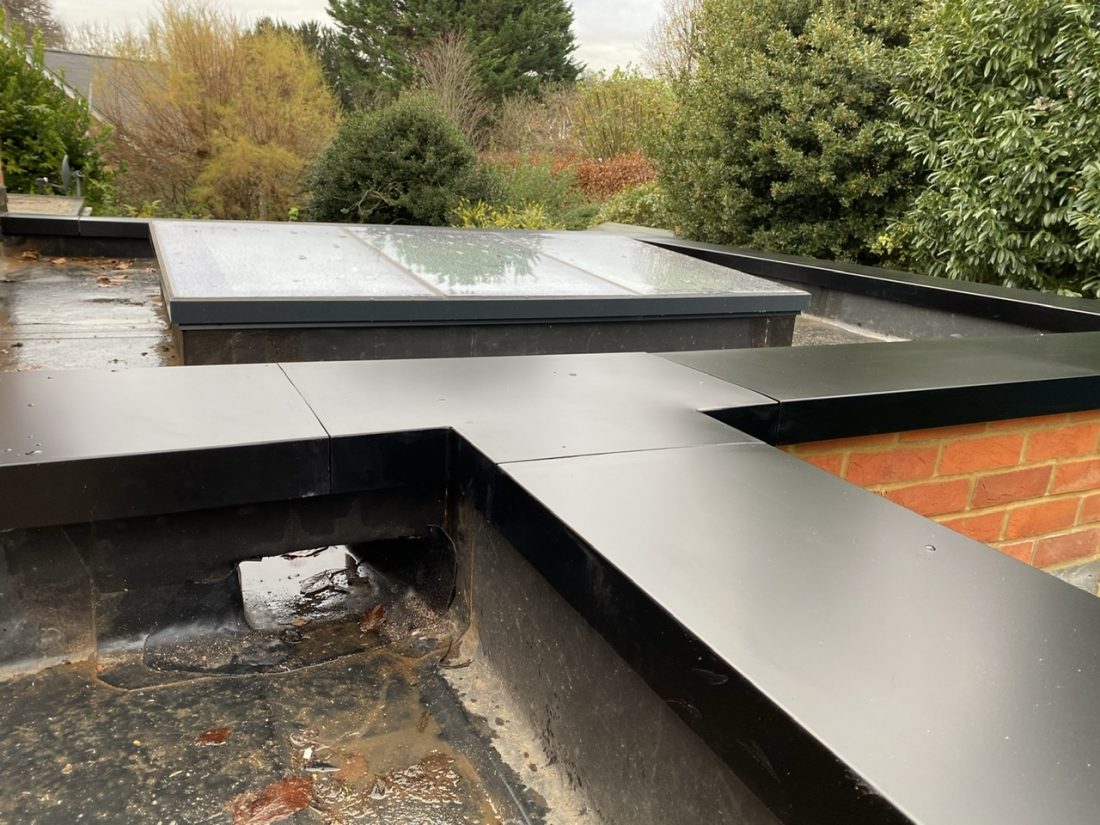
Aluminium copings are generally selected where a clean, consistent finish, low weight and colour flexibility are priorities. They are commonly fabricated from pressed aluminium sections and finished in polyester powder coating. This gives architects, contractors and property owners a wide choice of colours, from standard black, white and grey through to project-specific RAL shades.
Zinc copings are often chosen for their natural metallic appearance and the patina they develop over time. Zinc is widely associated with contemporary architectural cladding and roofing, although it can also complement certain traditional buildings where the wider roof finish calls for it. It is normally folded from sheet material and requires careful allowance for thermal movement.
Neither option is automatically better. A powder-coated aluminium coping may be the practical answer for a parapet requiring matched fascias, gutters, downpipes and window details. Zinc may be the stronger visual choice where a zinc roof or façade is already part of the design. The important point is to specify the coping as part of the complete wall-top and roof-edge build-up, rather than as a final cosmetic addition.
Appearance and finish options
The most obvious difference is finish. Aluminium can be supplied with a smooth, controlled powder-coated surface. This makes it straightforward to coordinate the coping with aluminium rainwater systems, soffits, fascias, doors or roofline trims. For larger schemes, colour consistency across multiple elevations is often a decisive benefit.
Powder coating also suits projects where the desired appearance needs to remain stable from day one. A dark grey coping can stay dark grey, provided it is properly cared for and not damaged during installation. Aluminium can also be specified in a mill finish where a natural metal appearance is preferred, although this is less common for exposed architectural copings.
Zinc begins as a bright or pre-weathered grey material, depending on the product selected. Over time, natural zinc develops a protective patina. That evolving surface is often valued, but it should be expected rather than treated as a defect. Colour can vary between elevations because weather exposure, runoff patterns and local conditions are never identical.
For listed properties and characterful renovations, material choice should follow the building’s existing details and planning requirements. A traditional wall may need a lead-style appearance, stone coping or a heritage profile rather than either aluminium or zinc. Where metal coping is appropriate, the profile, drips and visible joint lines matter as much as the metal itself.
Durability in the UK climate
Aluminium does not rust. Quality powder coating adds a further protective and decorative layer, making it well suited to regular rain exposure and ordinary urban or rural environments. Its low weight also reduces handling demands during installation, particularly on long parapet runs or where access is restricted.
Zinc is naturally corrosion resistant because its patina protects the underlying metal. It has a well-established record in roofing and wall applications, but it must be detailed correctly. Zinc should not be installed where water can sit for prolonged periods, and the substrate beneath must allow suitable ventilation and drainage where required by the chosen system.
Coastal and highly exposed locations need extra attention whichever material is used. Salt-laden air, wind-driven rain and frequent wetting can accelerate surface weathering and expose weaknesses in joints, sealants and fixings. The coping material is only one part of the solution. Adequate drips, correctly formed laps, secure brackets or cleats, and a sound waterproofing arrangement below are equally important.
Thermal movement and joint detailing
Long metal copings move as temperatures change. This is one of the areas where a visually simple wall-top detail can fail if it is over-fixed or poorly jointed.
Aluminium has a relatively high rate of thermal expansion. Long pressed aluminium coping lengths therefore need a fixing method that secures the section while allowing controlled movement. Depending on the system, this may involve concealed brackets, cleats, sliding points or purpose-made cover joints. Rigidly fixing every point can lead to distortion, noise or stress around fixings.
Zinc also expands and contracts, and its folded construction requires considered detailing at ends, corners and changes in direction. A zinc coping should be able to move without opening a joint or buckling across the wall. Its installation is usually more specialist where long lengths, complex shapes or integrated zinc roofing are involved.
In both cases, joints should be planned around practical section lengths rather than added wherever a sheet happens to end. Corners, stop ends, upstands and changes in level need to be fabricated to suit the wall. A made-to-measure approach usually produces a neater result and reduces reliance on site-cut sealant joints.
Drips and falls matter more than metal thickness
A coping should project sufficiently beyond each wall face and incorporate drips to throw water clear of the masonry. Without an effective drip, rain can track back beneath the coping and stain or saturate the wall below.
The top surface should also have an appropriate fall. Flat-looking copings are common in contemporary designs, but they should not create a level tray that holds water. This principle applies to aluminium versus zinc copings equally: good water management protects the wall, the finish and the roof-edge construction beneath.
Installation, weight and fabrication
Pressed aluminium copings are practical for both domestic and commercial work because they are lightweight, readily fabricated and available in a broad range of colours. Standard or bespoke sections can be produced to match parapet widths, with returns and drips formed for the required projection. This is particularly useful where a building has varying wall widths, rendered upstands or insulated roof details.
Aluminium also works well alongside other aluminium roofline products. Matching a coping to gutters, downpipes and fascias provides a coherent finish without introducing several different weathering patterns. For contractors, lighter sections can make manual handling and positioning easier, although safe access and suitable lifting arrangements remain essential on any roof-level installation.
Zinc is usually supplied as folded sheet work and may be fabricated by a specialist roofer or metalwork workshop. It can achieve refined, slim details, but the installation must respect the material’s movement and support requirements. Zinc work can be more labour-intensive on site, especially where joints, welts and complex corners are formed by hand.
Fixings should be selected for compatibility with the metal and the environment. Stainless steel fixings are commonly used, but the full detail must avoid harmful contact between dissimilar metals and prevent trapped moisture. The roof membrane, wall substrate, insulation build-up and coping support should all be checked before fabrication is ordered.
Cost and whole-life value
Initial cost varies according to coping width, thickness, finish, quantity, access and the number of corners or bespoke details. It is rarely useful to compare only a per-metre material price. A straight run on a low wall is very different from a wide parapet coping around a roof terrace with internal corners, outlets, balustrade penetrations and difficult access.
Aluminium is often cost-effective where powder coating, repeatable profiles and quick installation are required. Its colour range can also avoid the cost of separate finishing work. For projects needing coordinated aluminium gutters and downpipes, specifying one compatible material family can simplify procurement.
Zinc may carry a higher fabrication and installation cost, particularly when skilled site work is needed. That can be justified where its appearance is central to the architectural design or where it connects into a wider zinc roof system. Its patina can offer a distinctive long-term finish, but clients should be comfortable with natural variation.
Whole-life value comes from correct detailing, not simply choosing the most expensive metal. A well-supported aluminium coping with proper drips and movement joints will outperform a poorly installed zinc one, and the reverse is equally true.
Choosing the right coping for your project
Choose aluminium when you need a lightweight, colour-matched coping with predictable appearance and a practical route to bespoke pressed sections. It is particularly suitable for projects combining powder-coated fascias, soffits, gutters and downpipes, as well as commercial parapets where repeatable dimensions and efficient installation matter.
Choose zinc when the building design already uses zinc roofing or cladding, or when a naturally weathering metal surface is part of the intended character. Allow for specialist detailing and accept that the finish will change gradually with exposure.
Before placing an order, confirm the finished wall width, required overhang, drip positions, roof build-up, corner details, fixing method and any penetrations. A site measurement taken before the final render, cladding or coping support is complete can easily produce the wrong section.
For a tailored aluminium coping, Gutters Direct can help match pressed sections, powder-coated finishes and associated roofline products to the dimensions of the scheme. The best result is a coping designed to move, drain and finish cleanly from the first drawing, rather than one asked to correct a roof-edge problem after the work is complete.