

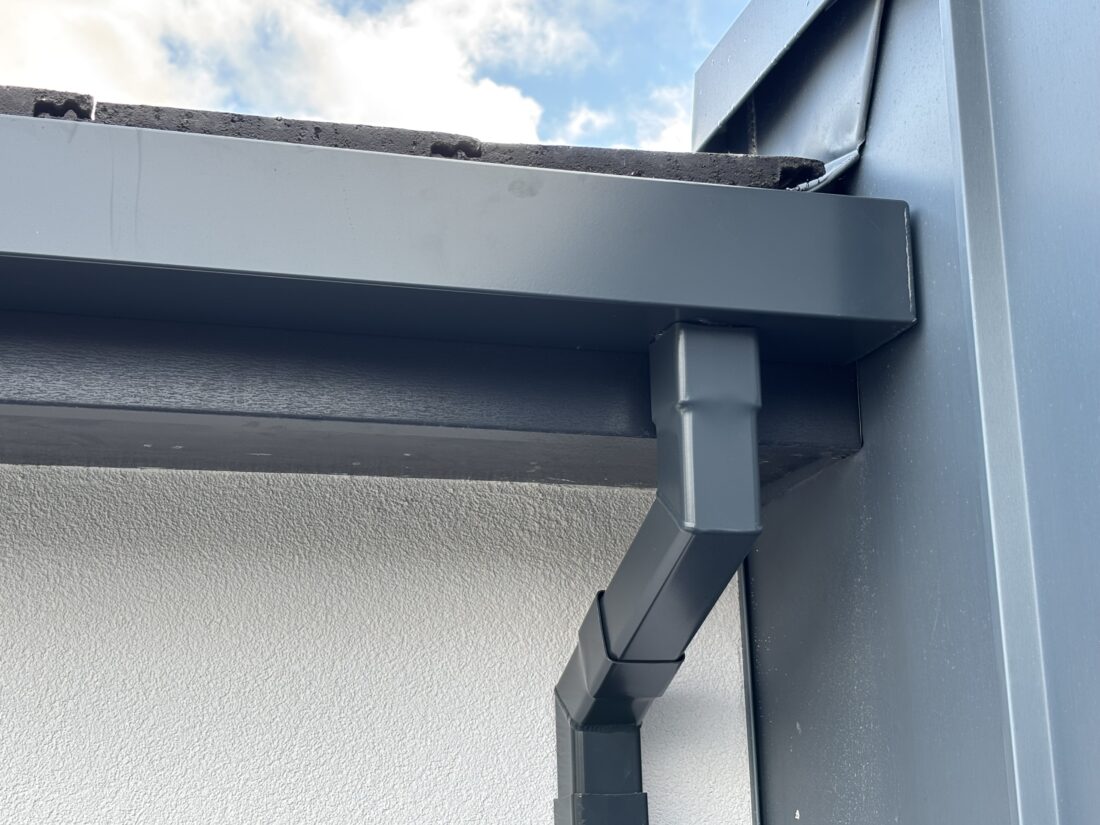
Commercial Gutter Maintenance Checklist for UK Sites
A blocked outlet on a commercial building rarely stays a small maintenance issue. Water backs up, overtops the gutter and finds its way into soffits, wall finishes, entrances and loading areas. This commercial gutter maintenance checklist is designed for facilities teams, roofing contractors and property managers who need a practical way to inspect high-capacity rainwater systems before poor drainage turns into fabric damage or disruption on site.
The right inspection frequency depends on the roof area, nearby trees, building height, gutter profile and local exposure. A retail unit beneath mature trees will need closer attention than a clear, low-rise industrial roof. Equally, a 200mm x 150mm pressed aluminium box gutter serving a large roof should not be treated like a domestic half-round system. Its capacity is greater, but the consequences of a blocked outlet are greater too.
Set the inspection schedule before the weather does
Most commercial properties benefit from a planned inspection at least twice a year: once in late autumn after leaf fall, and again in spring. Add a check after severe wind, prolonged rainfall, nearby construction work or any report of internal dampness.
Buildings in exposed coastal locations, sites with flat or low-pitch roofs, and properties surrounded by trees may need quarterly inspections. If access is difficult, a formal planned maintenance visit is usually more cost-effective than arranging emergency attendance after an overflow has damaged ceilings, stock or external finishes.
Before work begins, record the inspection date, weather conditions, roof access method, the person carrying out the check and any areas that could not be safely accessed. This creates a useful maintenance history and helps identify repeating faults, such as the same outlet blocking every autumn or a joint moving after thermal expansion.
Commercial gutter maintenance checklist: safe access first
Gutter cleaning is not simply a matter of taking a ladder to the eaves. Commercial rainwater systems are commonly installed at height, around service yards, public entrances, roof edges and plant areas. A proper risk assessment should confirm safe access, suitable equipment and exclusion zones below the work area.
Check that ladders, access towers, mobile elevated work platforms or roof access systems are appropriate for the building. Do not lean access equipment against aluminium gutters, downpipes or hopper heads. They are designed to manage rainwater, not to carry concentrated access loads.
Where roof work is required, confirm the roof surface can be walked on safely and that edge protection, fall restraint or other controls are in place. If the gutter is concealed behind parapets or within a box-gutter arrangement, the inspection may also require roof drainage checks rather than an eaves-level view alone.
Clear debris, then find the reason it collected
Leaves, moss, silt, broken tiles, nesting material and wind-blown litter are common causes of restricted flow. Remove debris by hand or with suitable tools, working towards collection points without forcing waste into outlets and downpipes.
Once the channel is clear, look at where the debris has settled. Localised build-up can point to insufficient fall, a low point in a long gutter run, a poorly positioned outlet or a section affected by movement. Cleaning without identifying that pattern often means the same blockage returns at the next storm.
Inspect the following items during every service visit:
- Gutter channels for leaves, moss, standing water, silt and visible distortion.
- Outlet holes and leaf guards for restrictions, loose fixings or damaged grilles.
- Hopper heads for trapped debris, overflowing marks and sound connections to downpipes.
- Downpipe shoes, gullies and surface drainage points for discharge restrictions.
- Roof valleys, rainwater outlets and abutments that feed directly into the gutter.
On buildings with substantial roof areas, consider whether existing leaf guards are suitable for the surrounding environment. Fine mesh can stop large leaves but may become coated with small debris and moss. Open guards allow more water through in some conditions but will not remove the need for cleaning. The best choice depends on the tree species, roof finish and how often access can be arranged.
Check falls, joints and support positions
After debris has been removed, use a controlled hose test where safe to do so. Start at the furthest practical point from the outlet and observe whether water runs freely. A small amount of residual water may occur in some profiles, but persistent standing water needs investigation.
Gutters should fall consistently towards outlets. Sagging between brackets, backfall away from an outlet or settlement around a joint can slow the flow and leave water sitting in the system. On extruded aluminium and pressed aluminium installations, inspect bracket spacing and fixing condition against the system design, particularly on long runs and high-capacity box gutters.
Look closely at joints, stop ends, angles and outlet connections. Signs of a fault include staining beneath the joint, water marks on cladding, white deposits, cracked sealant, loose bolts or movement at connected sections. Aluminium is corrosion resistant, but stagnant water, accumulated debris and incompatible materials can still create avoidable problems over time.
Where bolts, nuts or brackets need replacement, use components suited to the installed system and finish. Avoid mixing profiles or forcing parts together because they appear similar. Commercial systems rely on correct outlet sizes, bracket positions and joint details to achieve their stated drainage capacity.
Inspect downpipes all the way to the drainage point
A gutter may look clean at eaves level while the downpipe below is blocked. Check each downpipe from hopper or outlet to shoe, gully or below-ground connection. Look for dents, open joints, missing clips, impact damage from vehicles and evidence of water escaping at connections.
Downpipes in service yards and public-facing areas are particularly vulnerable. Anti-vandal pipe systems, protective guards or more durable fixing arrangements may be appropriate where pedestrian traffic, wheeled bins or vehicles regularly pass close to the wall.
At ground level, confirm that water can leave the system. A blocked gully, damaged grate or poorly maintained drain can make rainwater back up into the downpipe during heavy rain. If testing suggests an underground restriction, arrange drainage investigation rather than repeatedly clearing the gutter above it.
Examine the building fabric around the system
The gutter is only one part of the inspection. Follow the likely path of escaped water across the building. Check fascias, soffits, wall copings, parapets, brickwork, cladding interfaces and window heads for staining, algae growth, failed paint coatings, damp patches or cracking.
On older or listed properties, cast aluminium gutters and ornamental hopper heads may be part of the building’s architectural character. Repairs should preserve the profile, proportions and finish rather than replacing a damaged section with an unsuitable modern component. On contemporary schemes, colour-matched aluminium components help retain a consistent façade finish where repairs or extensions are needed.
Take photographs of defects with a clear location reference. Images taken after cleaning and testing are especially useful because they show whether a stain is historic or whether the system is still leaking.
Plan repairs by urgency, not appearance
Separate findings into immediate, planned and monitor-only work. An outlet blocked during wet weather, a loose length of gutter, a fractured downpipe or water entering the building needs prompt action. Minor coating scuffs or light staining may be suitable for planned repair, provided the system remains secure and watertight.
Replacement decisions should be based on capacity as well as condition. If an extension has increased roof area, or repeated overtopping occurs despite clear gutters and drains, the original profile may no longer be adequate. A larger pressed aluminium box gutter, additional outlets or correctly sized aluminium downpipes may be required following a proper assessment of roof catchment and discharge routes.
For projects requiring replacement sections, bespoke colours or a complete upgrade, Gutters Direct can help match aluminium profiles and advise on supply-only, cut-and-drop or fitting arrangements. Accurate measurements, photographs and details of existing outlets and downpipes will speed up that process.
A well-maintained commercial gutter system should be quiet in heavy rain: water enters, travels to the outlet and discharges without overtopping or staining the building. Treat each inspection as a chance to protect the roof edge, façade and drainage route before the next spell of weather tests every joint.