

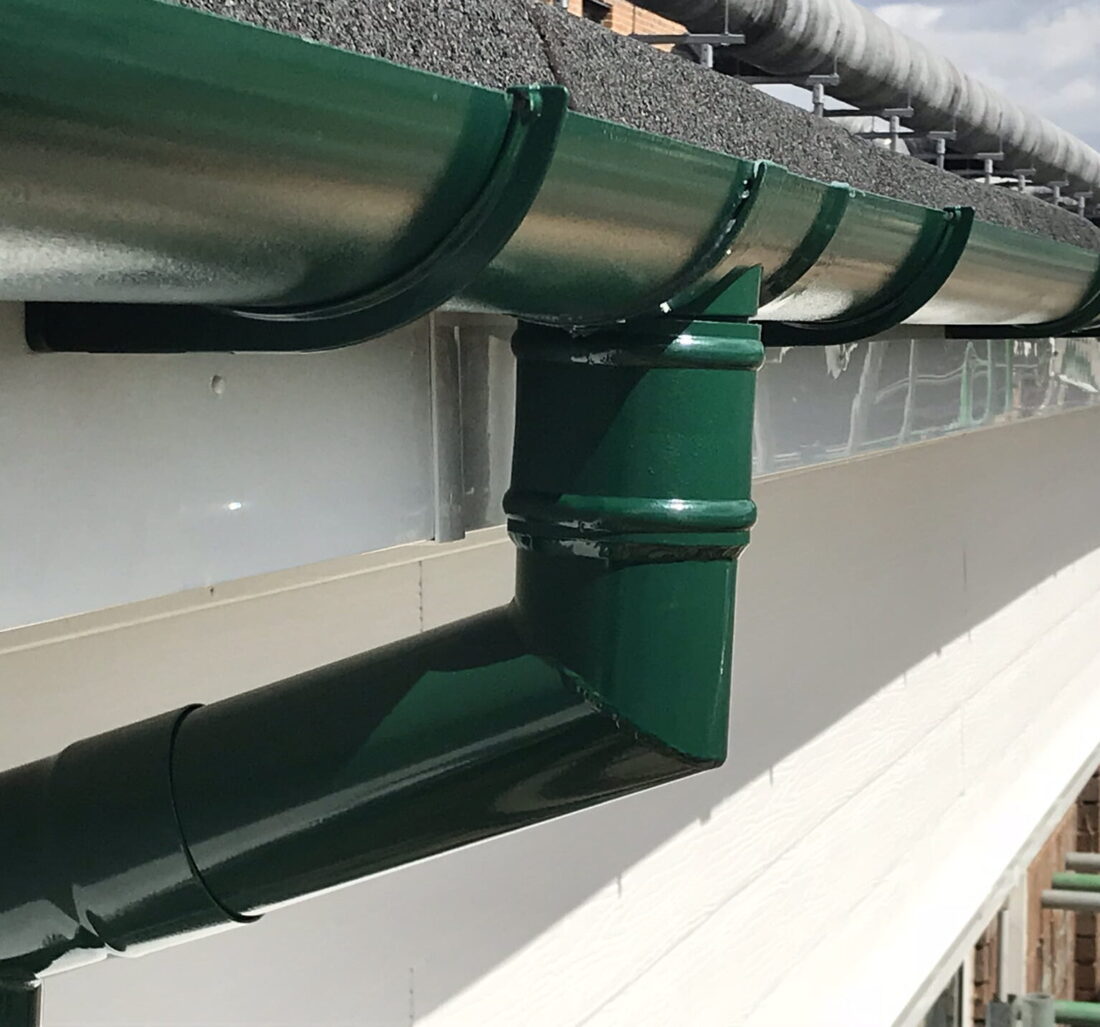
Roof Drainage Trends Shaping UK Buildings
A gutter system is often specified late, then expected to deal with every heavy shower for decades. Current roof drainage trends are changing that approach. Property owners, architects and contractors are giving more attention to rainwater capacity, material choice, appearance and access for maintenance before the roofline is closed in.
For UK projects, the common thread is practical: drainage has to suit the roof area, the building detail and the amount of water likely to reach each outlet. A well-chosen aluminium system can also contribute to the finished character of a period renovation, a contemporary self-build or a large commercial elevation.
Roof drainage trends changing specifications
Higher-capacity systems for larger roof areas
More projects are moving beyond a standard domestic gutter simply because it is familiar. Extensions, open-plan refurbishments, shallow-pitch roofs and modern housing designs can create large roof catchments feeding relatively few outlet points. If the gutter is undersized, water can overrun during intense rainfall, causing staining, saturated ground and damage around fascias, soffits and masonry.
This is driving demand for deeper and wider profiles, particularly pressed aluminium box gutters and commercial ogee systems. A 200mm x 150mm box gutter, for example, is designed for a very different task from a traditional half-round profile on a modest terrace. Downpipe capacity matters just as much. Specifying a large gutter but restricting it to inadequate downpipes or too few outlets can simply move the bottleneck.
Capacity should be considered alongside the roof pitch, valley positions, parapets, outlet locations and the distance water must travel along the run. On a new build, those details can be designed together. On a retrofit, the available fixing positions and existing drainage connections may set limits, so a site-specific approach is sensible.
Aluminium as a long-term roofline material
Aluminium is gaining ground where customers want a durable, low-weight rainwater system with a consistent finish. It does not rust in the way untreated steel can, and a quality powder-coated finish provides a clean, durable surface in a broad choice of colours. That makes it suitable for both exposed coastal or urban locations and projects where the roofline needs to coordinate with windows, cladding or metalwork.
The choice is not only about appearance. Extruded aluminium guttering offers accurate profiles and straightforward mechanical jointing, while cast aluminium is particularly appropriate where a period property needs deeper detailing, traditional shapes and ornamental hopper heads. Pressed aluminium box gutters are often selected for clean-lined modern buildings and larger commercial applications.
There is a cost conversation here. Aluminium may have a higher initial price than basic plastic guttering, but buyers often value its expected service life, rigidity and finished appearance. For contractors, its relatively low weight can also make handling and installation more manageable than heavier alternatives. The right system still depends on the building, budget and required capacity, rather than material preference alone.
Colour coordination is now part of the specification
Black, white and grey remain regular requirements, but roof drainage is no longer limited to a small set of stock colours. Architects and homeowners increasingly expect gutters, downpipes, fascias, copings and associated roofline items to complement the exterior scheme rather than stand apart from it.
For contemporary homes, anthracite grey, black and bespoke shades can align the rainwater system with aluminium windows, doors and standing-seam roofs. For heritage work, darker heritage tones can sit more comfortably against brick, stone, render and slate. A cast aluminium gutter with a correctly chosen hopper head and downpipe can look appropriate on a listed building without imitating a lightweight plastic replacement.
The practical point is to confirm the finish early. Bespoke powder-coating gives greater design freedom, but it may affect programme planning compared with an available stock finish. It is also worth ordering all visible components to the same finish specification, including stop ends, angles, outlets, pipe clips and hoppers, so the completed installation looks intentional.
Continuous and low-joint gutter runs
Fewer joints mean fewer potential points for leakage and a cleaner line along the eaves. This is one reason seamless ogee systems are increasingly specified for longer domestic elevations and modern developments. They can be formed in continuous runs to suit the building, reducing the number of union joints normally required with standard sectional guttering.
Seamless is not automatically the best answer for every project. Access, site layout, roof geometry and transport all influence whether it is practical to form and install long lengths. Complex elevations still require corners, outlets and planned connections. However, where a long straight run is available, a continuous aluminium gutter can offer a neat result with reduced joint maintenance.
For sectional systems, good installation remains the priority. Joints need to be correctly sealed and fixed, brackets set at suitable centres, and the gutter given a controlled fall towards the outlet. Aluminium components with swaged connections and properly matched fixings help create an orderly installation, but no profile compensates for poor falls or rushed setting out.
Heritage detail without compromising performance
Owners of Victorian, Georgian and Edwardian properties are asking for rainwater goods that respect the original building. This has increased interest in cast aluminium profiles, decorative ears, traditional downpipes and ornate hopper heads. These components can retain the visual weight and detail expected on a period façade while offering the corrosion resistance and paint finish associated with aluminium.
Listed buildings introduce an additional layer of care. Existing details may need to be recorded, profiles may need to match original sizes, and conservation requirements can influence the finish and fixing method. In these cases, selecting an attractive gutter shape is only the start. The capacity must also be sufficient for the roof, and the system has to connect sensibly to gullies, drains or rainwater harvesting arrangements.
A heritage profile can be used on a modern extension too, particularly where it needs to sit quietly alongside an older main house. Conversely, a simple extruded or box-gutter profile may be the better choice for a contemporary rear elevation. Matching every part of a property is not always necessary if the transition is deliberate and visually balanced.
Roof drainage trends in commercial maintenance
Facilities teams and commercial contractors are placing greater value on systems that are easy to inspect, repair and keep clear. Flat roofs, parapets, warehouse roofs and large retail units can direct significant volumes of water to a limited number of outlets. The resulting gutters and downpipes need capacity, secure bracketry and access for routine cleaning.
Heavy-duty aluminium box gutters, larger downpipes and anti-vandal pipe systems are increasingly relevant where impact risk or high footfall is a concern. Exposed downpipes at ground level may need additional protection, while upper-level runs require a safe maintenance plan. Leaves, moss and debris remain a straightforward cause of overflow, even in a generously sized system.
The best commercial specification considers replacement parts as well as first installation. Standardised profiles, available outlets, angles and pipe sections make future alterations less disruptive. Stock availability and short lead times can matter greatly when a failed gutter is affecting an occupied building or a live construction programme.
Design the whole water route, not just the gutter
A frequent mistake is to choose a gutter profile in isolation. Water has to travel from the roof edge through the gutter, outlet, downpipe and below-ground drainage without backing up. Valleys and internal corners can concentrate flow. Rainwater heads can provide useful collection capacity, but they must be proportioned correctly and kept accessible.
On refurbishment work, inspect the existing gullies and drainage connections before finalising the new system. A larger aluminium downpipe may require an adaptor or revised ground connection. On new projects, it is worth agreeing outlet positions with the roofing and drainage trades early, rather than altering pipe routes after cladding, render or landscaping is complete.
Gutters Direct can support this process with aluminium profiles for traditional, contemporary and commercial applications, whether the requirement is supply only, cut-and-drop delivery or a fitted solution. Clear roof dimensions, elevations, photographs and outlet details will help identify a practical system before materials are ordered.
The useful next step is simple: measure the roof runs, identify where water naturally concentrates, check the outlet routes and choose the profile around those facts. A rainwater system that suits the building on paper is far more likely to protect it properly once the weather turns.