

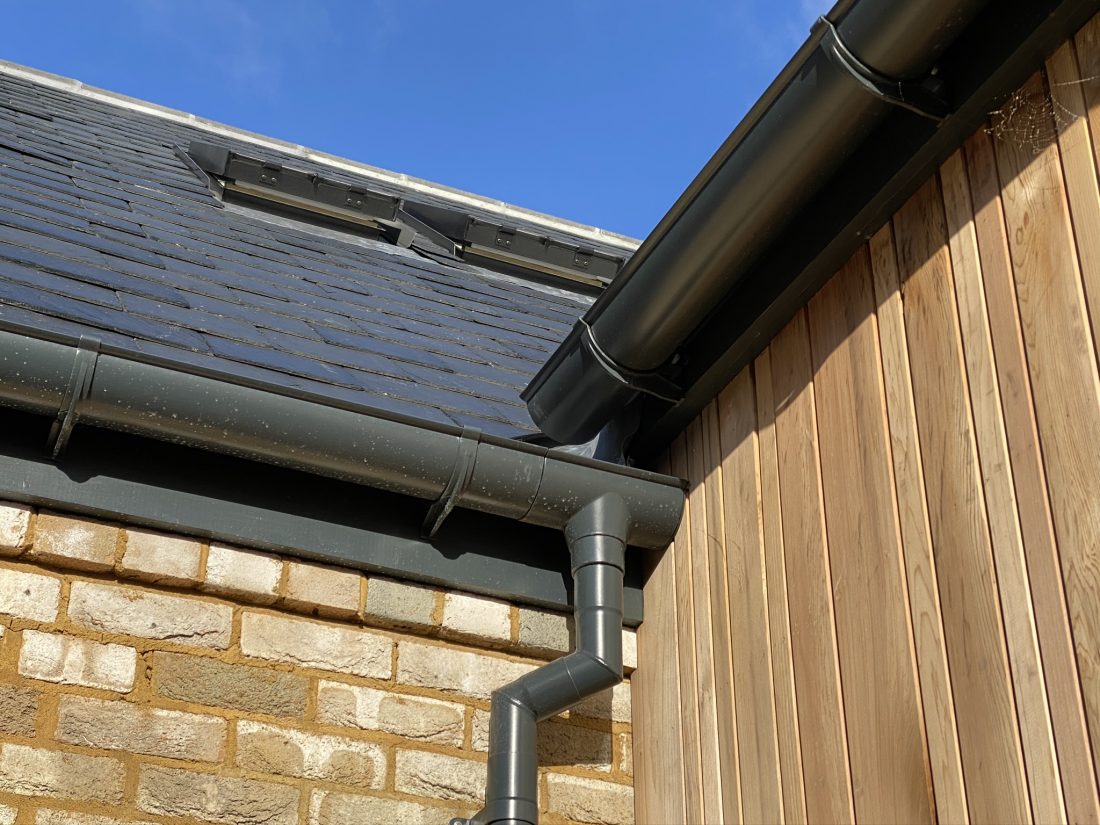
Roofline Materials: What Works Best in the UK
A roofline is only as reliable as the materials chosen for it. Gutters, downpipes, fascias, soffits, copings and brackets all work in the same exposed zone, dealing with rain, wind, frost and daily temperature changes. Selecting roofline materials therefore means looking beyond appearance. The right system must carry the expected water volume, suit the building’s character, fix securely to the structure and remain presentable with sensible maintenance.
For UK homes and commercial buildings, aluminium is often the strongest all-round choice. It is light, corrosion resistant and available in profiles that suit everything from a Victorian terrace to a clean-lined contemporary development. However, material choice should still follow the building, the roof area and the specification rather than a one-size-fits-all rule.
What counts as roofline material?
Roofline materials include the visible and functional components around the eaves and roof edge. Fascias close the edge of the roof structure and provide a fixing line for gutter brackets. Soffits cover the underside of the eaves, helping create a neat finish and, where required, allowing ventilation. Gutters collect roof water, while outlets, hopper heads and downpipes move it safely to the drainage system.
Wall copings and parapet drainage can also form part of the wider roofline package, particularly on commercial, flat-roofed and modern properties. These components should be considered together. A high-capacity gutter fitted with undersized outlets or too few downpipes will not perform as intended, whatever it is made from.
The main roofline materials compared
Aluminium: light, durable and highly adaptable
Aluminium rainwater systems are specified across domestic, heritage and commercial work because they combine low weight with long service life. Cast aluminium gutters and hopper heads offer the depth and detail needed for period properties, while extruded aluminium and seamless ogee systems give a crisp, consistent finish on newer homes. Pressed aluminium box gutters are particularly useful where roofs produce higher volumes of runoff or where a contemporary box profile is required.
Unlike ordinary steel, aluminium does not rust. Quality powder coating adds a further protective finish and gives far more colour choice than standard white plastic. Black, anthracite grey and heritage shades are popular, but a customer-selected RAL colour can help fascias, soffits, gutters and downpipes sit properly alongside windows, cladding or existing exterior joinery.
Aluminium is also practical on site. Components are easier to handle than heavier cast iron, and systems can be supplied in standard lengths, cut to size or formed as continuous seamless runs where suitable. The key is correct installation: joints, outlets, stop ends, bracket spacing and fall all need to be set accurately. Aluminium is durable, but it is not a substitute for sound detailing.
uPVC: economical but not always the right finish
uPVC remains common on many houses because it is inexpensive, widely available and straightforward to install. It can be a sensible choice for a low-budget repair on a standard property, especially when matching an existing plastic system is more important than changing the whole roofline.
The compromise is appearance and long-term movement. Plastic can expand and contract noticeably through seasonal temperature changes, so fitting tolerances matter. Over time, some finishes can fade, become brittle or look less crisp than metal alternatives. uPVC fascias may also conceal problems in underlying timber if replacement work is carried out without checking the condition of the rafter ends first.
For listed buildings, conservation areas and properties with original cast profiles, plastic guttering is rarely the most sympathetic option. Its moulded shape can look out of scale beside traditional brickwork, sash windows and decorative details.
Timber: traditional character with ongoing maintenance
Timber fascias and soffits remain appropriate on certain heritage buildings, particularly where the original roof edge is timber and planning or conservation requirements call for a like-for-like appearance. Properly detailed and painted timber can look excellent.
It does, however, need regular inspection and decoration. Failed paint finishes, blocked gutters and poorly ventilated eaves allow moisture into the timber, leading to rot. Timber is best treated as a considered architectural choice rather than a fit-and-forget material. Pairing retained or renewed timber fascias with aluminium gutters can provide traditional character at the roof edge while reducing maintenance demands on the rainwater system.
Steel and cast iron: where weight and maintenance matter
Galvanised or coated steel can be specified for industrial applications, but it requires close attention to coating quality, cut edges and corrosion protection. It is generally heavier than aluminium and may need more care in aggressive coastal or polluted environments.
Cast iron has genuine heritage appeal and can be required on sensitive restoration projects. It is strong and available in traditional profiles, but its weight affects handling and support requirements. It also relies on paint maintenance to prevent rust. Where a cast appearance is needed without the weight and painting cycle of iron, cast aluminium profiles are often worth considering.
Match the profile to the roof, not just the elevation
A gutter that looks right from the pavement may still be too small for the roof area. The roof pitch, plan area, valleys, dormers and local rainfall exposure all affect how much water reaches the gutter. A modest semi-detached house may suit a standard ogee or half-round profile, while a large slate roof, a deep valley or a commercial elevation may require a larger modern ogee or box gutter with increased outlet capacity.
Commercial schemes often need a more calculated approach. A 200mm x 150mm box gutter, for example, is selected for water capacity and drainage layout, not simply for its visual presence. Downpipe size and position are equally significant. Long gutter runs with insufficient falls, or outlets placed too far apart, can lead to standing water and overflow during heavy rain.
This is why it helps to establish the roof drainage arrangement before ordering materials. Measurements should include gutter run lengths, outlet positions, downpipe routes, bracket fixing locations and any changes in level. On refurbishment work, check whether existing fascias, brickwork or eaves can safely accept the proposed fixings.
Finish, colour and architectural character
The finish chosen for roofline materials can either support the building or draw attention to the wrong details. On period homes, black, heritage grey and muted colours often work well with slate, brick and painted timber. Ornamental hopper heads and traditional round or rectangular downpipes can complete the look without introducing excessive decoration.
Contemporary projects usually benefit from restraint. A seamless aluminium ogee gutter in black or anthracite, paired with matching square or round downpipes, creates a controlled roof edge. Box gutters and folded aluminium fascias can be colour matched to window frames or metal cladding where the specification calls for a unified façade.
Powder coating is more than a colour decision. It provides a durable factory-applied finish, but it should be protected during transport, storage and installation. Avoid dragging sections across hard surfaces, use suitable fixings and touch up only where the coating manufacturer permits. Site damage left untreated can undermine an otherwise long-lasting installation.
Do not separate material choice from installation
Good materials can fail early when installation is rushed. Gutters need a consistent fall towards outlets, while brackets need suitable spacing for the profile and local exposure. Downpipes must be clipped securely, with adequate allowance for access around doors, paths and drainage connections. Fascias and soffits must be fixed back to sound structure, not simply over decayed timber.
Joints deserve particular attention. Some aluminium systems use bolted, sealed joints, while seamless systems minimise the number of joints across a run. Neither approach is automatically better in every situation. Seamless gutters reduce potential leak points on long, straightforward elevations; sectional systems can be more practical where access is restricted, runs change direction or future alterations are likely.
For supply-only orders, it is worth confirming every component before work starts: running outlets, angles, stop ends, unions, brackets, swaged downpipe sections, offsets, shoes and fixings. Small omissions can delay a job more than the main gutter lengths ever will.
Choosing roofline materials with confidence
Start with the building type, then assess water capacity, fixing conditions, visual requirements and maintenance expectations. A heritage property may call for cast aluminium gutters, traditional hopper heads and a colour that respects the original elevation. A self-build may suit seamless ogee guttering with powder-coated fascias and soffits. A warehouse, school or larger development may need a heavy-duty pressed aluminium box gutter designed around high roof drainage loads.
The most effective specification is the one that deals with rainwater properly and looks appropriate years after the scaffold has come down. If dimensions, profile capacity or component selection are uncertain, a technical conversation before ordering is usually cheaper than adapting the system once fitting has begun. Gutters Direct can support supply-only, cut-and-drop and installation requirements, helping keep the roofline solution practical from first measurement to final downpipe connection.