

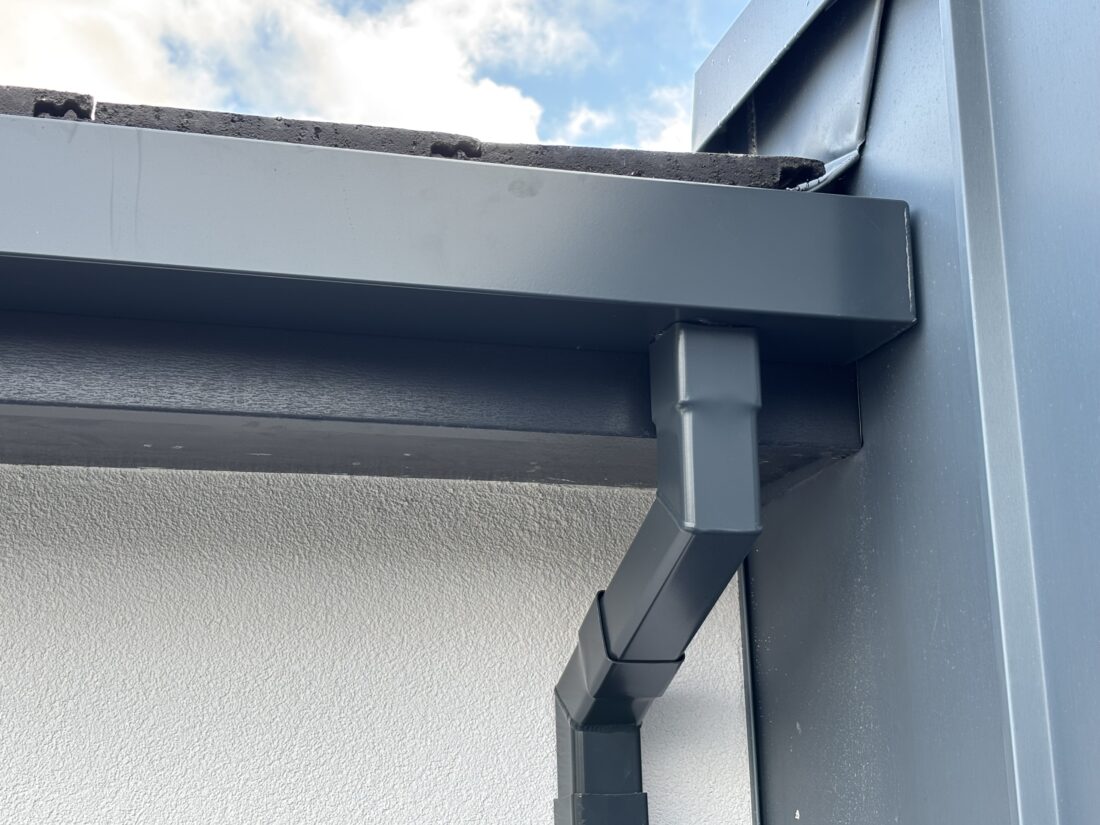
Anti Vandal Aluminium Downpipes for UK Sites
A downpipe at ground level is exposed to more than rainwater. On schools, public buildings, retail units, housing blocks and busy access routes, it can be struck by bins, bicycles and vehicles, or deliberately pulled away from the wall. Anti-vandal aluminium downpipes are specified where the rainwater system needs to stay secure, presentable and serviceable under tougher site conditions.
Aluminium is well suited to this role. It offers a long service life, does not rust like unprotected steel and is considerably lighter to handle than cast iron. When paired with the right brackets, fixings and outlet arrangement, an anti-vandal system can protect the lower section of a drainage run without compromising the appearance of the building.
What makes a downpipe anti-vandal?
The term anti-vandal does not mean a downpipe is impossible to damage. It describes a system designed to make impact, removal and tampering more difficult than with a standard domestic installation. The result depends on the complete lower-pipe detail, not simply the material of the downpipe.
A typical specification uses a more substantial aluminium pipe section, closely spaced or security-minded fixing points, and a secure connection between the pipe and the outlet below. Brackets should be selected to suit the wall construction and installed with fixings appropriate to the substrate. A sound fixing into masonry is very different from a fixing into a lightweight cladding panel or insulated render system.
The vulnerable area is usually the first 1.5 to 2 metres above ground level. This is where a downpipe can be kicked, hit or used as a handhold. Some projects use an anti-vandal lower section joined to a conventional aluminium downpipe above. Others continue the heavier-duty arrangement for the full height, particularly on schools, transport buildings and exposed commercial elevations.
Why aluminium is a practical choice
For many refurbishments, aluminium gives the visual quality of a premium rainwater system without the weight associated with cast iron. It is easier to transport around site, simpler to lift into position and available in profiles that suit both traditional and contemporary elevations.
Its corrosion resistance is a key advantage in the UK climate. A correctly finished aluminium downpipe will not develop red rust, and powder-coated finishes can be selected to coordinate with windows, fascias, cladding or existing rainwater goods. Black remains popular for heritage-style schemes, but anthracite grey, white and project-specific RAL colours are frequently specified on modern work.
There is a trade-off. Aluminium resists weathering very well, but a thin or poorly supported pipe can still be dented by a hard impact. This is why anti-vandal performance should be addressed through profile selection, wall brackets, jointing and ground-level detailing rather than relying on the metal alone.
Choose the profile around water capacity
Security is only one part of the brief. The pipe still has to move the volume of water collected by the gutter. A downpipe that is undersized can cause water to back up at the outlet in heavy rainfall, leading to overflowing gutters and staining below the eaves.
Round, rectangular and square aluminium downpipes are available for different architectural styles and drainage demands. A period property may need a traditional round pipe with a cast-effect hopper, while a contemporary block of flats may call for crisp rectangular lines. Larger roofs, box gutters and commercial gutter systems often require higher-capacity outlets and downpipes.
The right size depends on roof area, gutter profile, outlet positions, rainfall exposure and the route to drainage. On a long run, adding outlets can be more effective than expecting one downpipe to deal with the entire roof area. For a commercial project, this calculation should sit within the wider rainwater design rather than being decided by appearance alone.
Specifying anti-vandal aluminium downpipes correctly
A clear specification prevents the common problem of ordering a quality pipe but leaving the installer to improvise the most exposed details. Establish whether the pipe runs directly to a gully, discharges into a shoe, connects to below-ground drainage or terminates above a drainage channel. Each arrangement affects how the lower end is secured.
The following points should be agreed before ordering:
- the downpipe profile, diameter or face dimensions, and required water capacity;
- the height of the anti-vandal section and whether it is continuous or localised at ground level;
- the wall construction, insulation depth and fixing method for brackets;
- the outlet, shoe or drainage connection at the base of the pipe; and
- the required powder-coated colour, finish and any planning or conservation requirements.
Where pipes are fitted to rendered insulation, rainscreen cladding or a façade with a cavity, bracket fixing needs particular care. Fasteners must reach a suitable structural backing or use an approved support system. Fixing only to the outer finish can lead to movement, cracked render and eventual failure, regardless of the quality of the aluminium pipe.
Brackets and joints matter as much as the pipe
The bracket arrangement should stop the downpipe twisting, rattling or being levered away from the elevation. Brackets are normally positioned at regular intervals, with additional support around offsets, branches and changes in direction. The exact spacing should follow the system guidance and the site conditions. A pipe next to a service yard or school playground may justify closer support than one on a protected private elevation.
Swaged aluminium components can provide neat, direct connections where one section fits into another. Depending on the selected system, joints may use socketed sections, unions or purpose-made connectors. The fitting method must allow water to travel down the pipe without escaping at a joint, while also keeping the assembly securely aligned.
Avoid mixing incompatible materials or components without checking the detail. A mismatched outlet, improvised bracket or poorly sealed adaptor can create leaks and weak points. It can also undermine the finished appearance of an otherwise well-specified system.
Where anti-vandal protection is most useful
Not every home needs an anti-vandal detail on every downpipe. On a detached house with gated side access, standard aluminium downpipes and correctly spaced brackets may be entirely suitable. The case is stronger where there is public access, regular deliveries, shared circulation space or a history of damage.
Schools and leisure facilities are obvious examples, particularly around playground-facing elevations. Retail and commercial premises benefit where pipes run beside loading areas, entrances or bin stores. Housing associations and facilities teams may specify them on communal blocks to reduce repeat repairs. They are also a sensible consideration for exposed pipework on community buildings, car parks and public realm projects.
For listed buildings, the visual requirement can be just as demanding as the security requirement. A traditional-style cast aluminium hopper head and round downpipe can retain the intended character, while the ground-level fixing detail is upgraded to suit the site. This avoids treating heritage appearance and practical durability as competing priorities.
Installation checks that prevent call-backs
Before fitting, check that outlets line up with the intended pipe route and that the wall is sufficiently even for the brackets. Set the downpipe plumb, but do not force sections into alignment if the outlet has been installed out of position. Correcting the route early is preferable to putting joints and brackets under constant strain.
Keep joints clean during assembly, use compatible fixings and check that water discharges positively into the chosen drainage point. Protective film, swarf and site debris should be removed before handover. On powder-coated aluminium, take care when cutting or handling components so the visible finish is not marked.
For supply-only orders, dimensions, finish and component compatibility should be confirmed before materials arrive on site. Gutters Direct can provide aluminium downpipe components, colour-finished systems and technical guidance for standard or project-specific requirements, with cut-and-drop and installation options where needed.
A well-planned lower-pipe detail costs far less than repeated repairs to a damaged elevation. If a downpipe is likely to be struck, climbed or tampered with, specify the protection at the design stage and make the brackets, joints and drainage connection part of the same decision.