

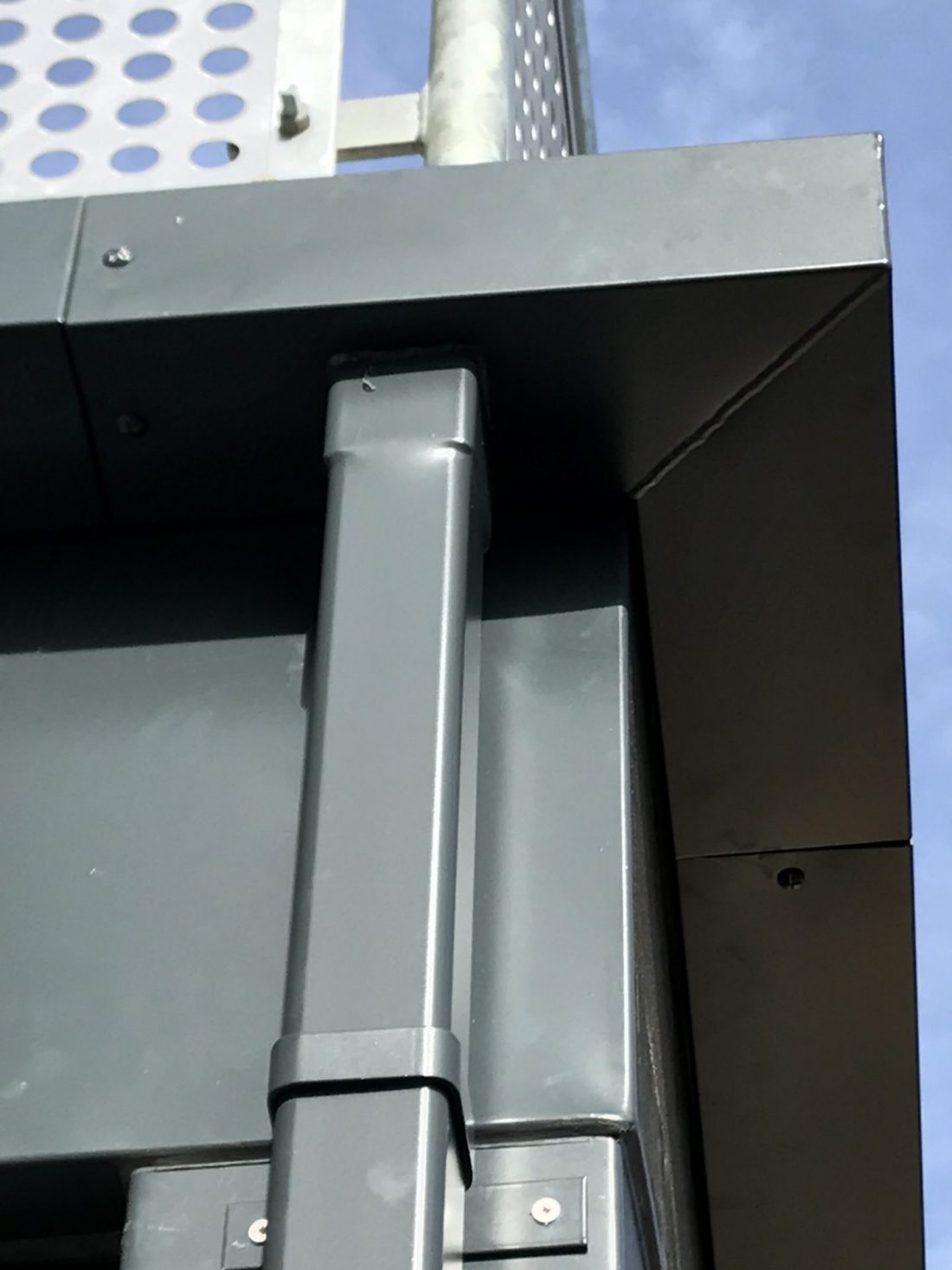
Square Aluminium Downpipe System for UK Buildings
A square aluminium downpipe system gives a building a deliberately clean, architectural finish while carrying roof water safely away from the gutter line. It suits contemporary homes particularly well, but its neat geometry can also work on extensions, converted properties, schools, offices and light-commercial projects where a round pipe would look out of place. The key is to specify the pipe size, outlet arrangement and fixing method around the roof area and expected water flow, rather than choosing on appearance alone.
Why choose a square aluminium downpipe system?
Square downpipes create straight vertical lines that complement box gutters, modern ogee gutters and flat-roof drainage details. They are often selected where fascias, cladding, window reveals or architectural features already follow a crisp rectangular pattern. The result is a rainwater installation that looks considered rather than added as an afterthought.
Aluminium brings practical benefits alongside that appearance. It is considerably lighter than cast iron, corrosion-resistant and suitable for powder coating in a wide range of RAL colours. That makes it possible to match downpipes to gutters, window frames, soffits, cladding or the wider colour scheme. A factory-applied finish also avoids the regular repainting associated with many older rainwater materials, provided the system is cleaned and maintained properly.
For contractors, the lower weight is useful on site. Lengths are easier to handle, transport and fix, while aluminium fittings provide a durable alternative where a project calls for a premium, long-life rainwater solution. For property owners, the benefit is straightforward: a well-specified system manages water effectively without compromising the building’s exterior.
Start with drainage capacity, not just profile
The correct downpipe is determined by the amount of water the gutter must discharge. Roof area, roof pitch, valley positions, local exposure and gutter profile all affect the volume reaching an outlet during heavy rainfall. A large roof served by a high-capacity box gutter may need larger square downpipes, additional outlets or both. A modest porch or single-storey extension will have very different requirements.
This is why downpipe selection should be considered with the complete rainwater system. The gutter outlet, offset bends, pipe length, shoe and drainage connection all need to work together. Restricting a large gutter outlet into an undersized pipe can create a bottleneck just when the system is under pressure. Water may then back up at the outlet, spill over the gutter front or run down walls.
As a rule, a square profile should be chosen because it offers the required capacity and fits the design, not because it simply appears substantial. On commercial schemes, it is sensible to assess each elevation separately. One roof slope may collect significantly more water than another because of a valley, parapet arrangement or adjoining roof level.
Outlet positions matter
A downpipe can only remove water that reaches its outlet. Long runs of gutter need adequate fall and suitably positioned outlets, especially where there are internal corners or valleys. An outlet near the centre of a long gutter run may require falls running in two directions, while an outlet at one end requires the gutter to be set with a consistent fall towards it.
Where drainage is being replaced on an existing building, check whether the underground gullies and drains can accept the revised layout. Moving a downpipe for a cleaner façade may introduce additional bends or leave a discharge point without a suitable connection below. The visible pipework and the drainage below ground should be planned as one system.
Square downpipes and compatible aluminium gutters
A square aluminium downpipe system is commonly paired with pressed aluminium box gutters or other contemporary aluminium profiles. Box gutters and square pipes share a simple visual language, making them a natural option for modern new builds, blocks of flats, commercial entrances and extensions with sharp-edged roof details.
That does not mean square pipes are restricted to box gutter projects. They can be used with selected extruded and ogee aluminium gutters where the property design supports the combination. The connection between the gutter outlet and pipe is the important part. Use purpose-made outlets and matching bends rather than attempting to adapt incompatible components on site.
For period properties, a round or traditional cast aluminium downpipe may be the better architectural choice, particularly where listed-building details or ornate hopper heads are involved. There is no single profile that suits every property. A square pipe offers a strong contemporary finish, while traditional elevations may call for a more sympathetic heritage profile.
Specify the components before ordering
A complete installation normally includes more than straight pipe lengths. The exact arrangement depends on the eaves position, wall construction and drainage point, but it will often require an outlet, bends or offsets, pipe clips, a shoe and possibly a hopper head or access component. Missing one small item can delay a fitting programme, particularly when work is arranged around scaffolding or other trades.
Measure the wall height and identify every change in direction. An offset is often needed to bring the pipe from the gutter outlet back to the wall face. Check the projection of the eaves, fascia depth, insulation build-up and any cladding before selecting bends. It is better to establish the offset accurately than to force pipework into line during installation.
Pipe clips should suit both the downpipe profile and the substrate. Masonry walls, timber-framed elevations, external insulation systems and cladding façades can each require different fixings or support strategies. Fixings must reach a sound structure, not only a decorative finish. On exposed elevations or busy public areas, anti-vandal fixings may also be worth considering.
Allow for cutting, joints and movement
Aluminium systems are usually supplied in manageable standard lengths and cut to suit on site or through a cut-and-drop service. A clean, square cut makes a real difference to the fit and appearance of joints. Remove sharp edges after cutting and follow the manufacturer’s guidance for jointing, sealing and fixing centres.
Like other metals, aluminium moves with temperature changes. This is more relevant on long gutter runs, but pipes should still be fitted with the specified clips and joint details rather than over-restrained. Do not substitute random sealants or drill unnecessary holes through visible faces. Purpose-designed components give a cleaner result and help maintain the finish.
Finish options for a coordinated exterior
Powder-coated aluminium allows square downpipes to become part of the building design rather than a default black or white utility item. Black, anthracite grey and dark bronze remain popular for contemporary projects, while lighter greys, whites and bespoke RAL shades can coordinate with render, windows and metal cladding.
A dark finish can make pipework visually recess against dark brick or cladding. On a pale rendered wall, a colour-matched pipe may be less intrusive, while a contrasting colour can be used deliberately to define a façade. Consider the finish alongside the gutter, hopper, fascias, soffits and any external metalwork before placing an order.
The coating should be protected during storage and installation. Keep lengths supported, avoid dragging them across abrasive surfaces and remove swarf after drilling or cutting. Small installation marks may be more noticeable on lighter or satin finishes, so careful handling is part of achieving the intended appearance.
Fitting for reliable long-term performance
Downpipes need to be plumb, securely clipped and positioned so they discharge into a suitable gully, drain connection or approved surface-water arrangement. The lower shoe should direct water without splashing against the wall or undermining paving. Where a pipe terminates close to pedestrian routes, consider the risk of impact and the practical need for protection.
Maintenance is limited but not optional. Clear leaves and moss from gutters, outlets and hopper heads so water can enter the pipe freely. Inspect joints, clips and shoes periodically, particularly after storms or building works. A blocked outlet can make even a correctly sized square pipe appear inadequate.
For supply-only orders, detailed measurements and a simple elevation sketch help confirm the required components. For more involved work, Gutters Direct can support a tailored supply, cut-and-drop or installation arrangement, helping keep the gutter and downpipe specification aligned from the start.
A square aluminium downpipe is most effective when it is treated as a working part of the drainage design, not merely a finishing detail. Match the profile to the architecture, size it for the roof and use compatible aluminium components throughout. That approach gives the building the clean lines it needs and the rainwater capacity it will rely on when the weather turns.