

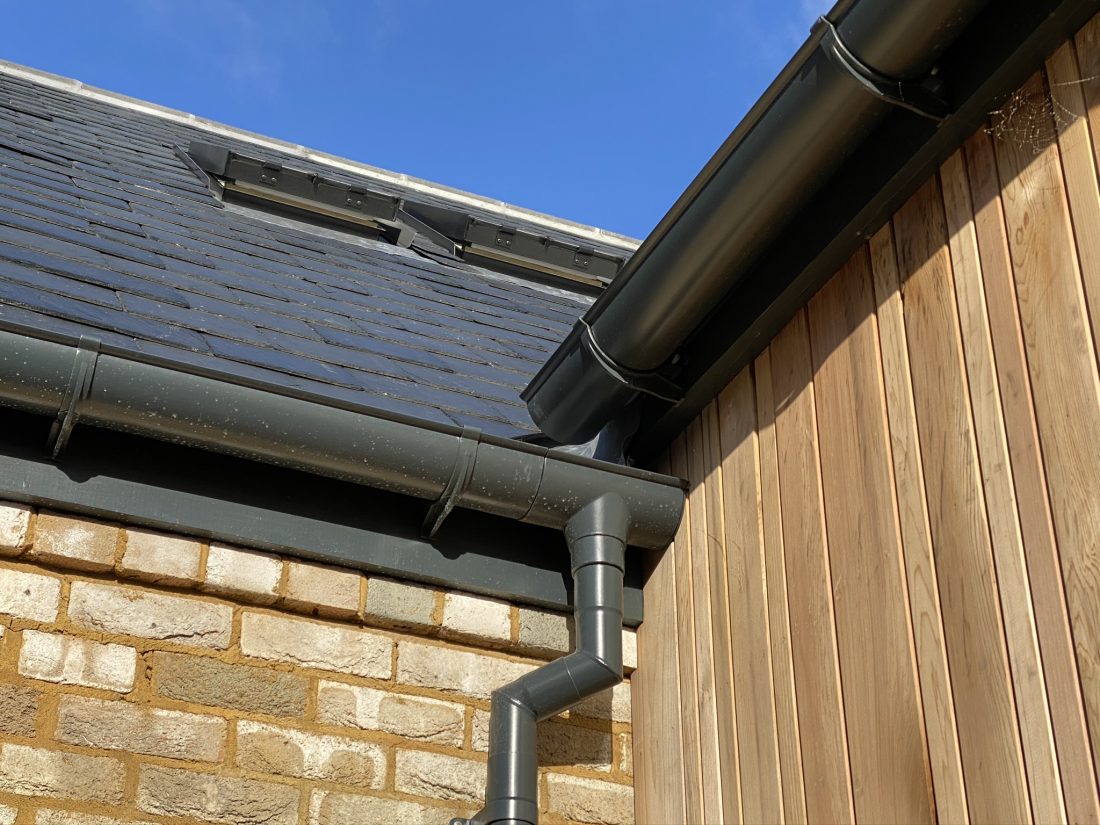
How Long Aluminium Gutters Last in the UK
A gutter system can look perfectly sound from ground level while quietly allowing water to spill behind the fascia, soak masonry or overload at every downpour. For anyone replacing rainwater goods, the practical question is how long aluminium gutters last – and whether the system will suit the building, rainfall levels and maintenance plan.
A correctly specified and professionally fitted aluminium gutter system should commonly provide 30 years or more of service. Many installations continue to perform well for 40 years and beyond. Cast aluminium systems on well-maintained homes can last substantially longer, particularly where the original profile, joints and coatings have been properly cared for.
That lifespan is not a blanket guarantee. Gutter profile, metal thickness, coating quality, exposure and installation details all have a direct bearing on how long the system remains watertight and presentable.
Why buy from Guttersdirectonline:
Aluminium does not rust in the way steel does. Its surface naturally forms a thin oxide layer that helps protect the metal beneath from further corrosion. This makes it a strong long-term choice for UK rainwater systems, where gutters are exposed to regular wetting, frost, leaf debris and changing temperatures.
For a domestic property, 30 to 40 years is a sensible expectation for good-quality extruded or pressed aluminium guttering fitted to the right falls and supported correctly. A cast aluminium gutter, often selected for period properties because of its traditional depth and detail, may serve for 40 to 50 years or longer. The heavier sections and durable material make these systems especially suited to heritage refurbishment when the building needs a profile with architectural character as well as reliable drainage.
Commercial and high-capacity systems can achieve a similarly long working life, but their outcome relies more heavily on hydraulic design. A 200mm x 150mm box gutter carrying roof water from a large elevation has very different demands from an ogee gutter on a detached house. If the gutter is undersized or downpipes are too few, standing water and regular overflow can shorten the useful life of even a high-quality aluminium installation.
Why aluminium lasts well on UK buildings
The main benefit is corrosion resistance combined with low weight. Aluminium is far easier to handle than cast iron during installation, yet it delivers a substantial, rigid rainwater system when the profile and bracket centres are correctly selected. It will not develop the widespread red rust associated with neglected steel gutters, and it does not become brittle in the manner some older plastic systems can over time.
Powder coating adds another protective and visual layer. A factory-applied or professionally specified polyester powder-coated finish helps maintain colour consistency across gutters, downpipes, hoppers and associated roofline details. It also gives architects and homeowners far more freedom than standard white plastic, whether the requirement is heritage black, anthracite grey, a muted heritage tone or a colour matched to windows and cladding.
There is a useful distinction between the coating and the aluminium itself. A scratched or weathered coating may need local attention to preserve appearance, but it does not mean the underlying gutter has failed. Where bare aluminium is exposed, its natural oxide layer still offers protection. Promptly repairing deeper damage is nevertheless good practice, particularly in exposed locations.
The factors that can shorten gutter life
Water should move through a gutter and into the downpipe, not sit in one place. Poor falls are one of the most common avoidable causes of premature problems. A run installed level, or with a reverse fall, can retain water and debris around joints. Over time, this places unnecessary stress on seals, coatings and fixings.
Jointed gutters require particular care. Cast and extruded systems are normally assembled from manageable lengths using unions, stop ends, outlets and bolts or fixings appropriate to the profile. These connections need clean mating surfaces, correct seals and enough allowance for thermal movement. Aluminium expands and contracts as temperatures change, so forcing long runs tightly between fixed points can lead to distortion or leaks at joints.
Seamless aluminium ogee systems reduce the number of joints along a run because they are formed to the required length on site. This can be a major advantage on long, clean-lined elevations. It does not remove the need for accurate outlets, stop ends, bracket spacing and falls, but fewer joints mean fewer potential leak points.
The local environment matters too. Coastal properties face salt-laden air, while industrial areas can expose coatings and fixings to more aggressive contamination. These sites benefit from a carefully chosen powder-coating specification and regular washing. Aluminium remains a very capable option in these conditions, but the system should be specified for the exposure rather than treated as a standard installation.
Physical damage is another consideration. Ladders, overfilled roof valleys, falling branches and poorly positioned access equipment can dent gutters or damage a coating. At ground level, downpipes on public-facing buildings may need anti-vandal protection or a more durable arrangement to prevent repeated impact damage.
Specification matters more than material alone
Choosing aluminium is only the first decision. The gutter must have enough capacity for the roof area, pitch, local rainfall intensity and number of outlets. A shallow domestic profile may be entirely appropriate for one elevation but inadequate for a large roof discharging into a single corner outlet.
Downpipe capacity is just as important. Water cannot leave the gutter fast enough if the outlet is restricted, the downpipe is undersized or the route has unnecessary bends. Overflowing water often gets blamed on the gutter material, when the real issue is layout. For extensions, flat roofs, commercial units and buildings with long valleys, it is worth checking the rainfall calculation before ordering components.
Bracket centres should suit the selected system and site conditions. Wide spacing can allow a gutter to sag under snow, water or leaf loading, compromising the fall. Fascia condition also matters. There is little value in installing a long-life gutter onto decayed timber that cannot hold its fixings securely.
For listed buildings and traditional renovations, profile selection deserves equal attention. A cast aluminium half-round, moulded ogee or heritage hopper can retain the visual proportions of the original rainwater goods without accepting the weight and corrosion burden of old cast iron. Modern buildings may instead benefit from extruded lines, seamless ogee runs or pressed aluminium box gutters with sharp, consistent detailing.
Maintenance that protects a 30-year-plus system
Aluminium gutters are low maintenance, not no maintenance. An inspection each autumn and spring is usually enough for most houses, with extra checks after severe storms or nearby building work. Clear leaves, moss and silt before they form a dam at an outlet. Look for standing water after rainfall, loose brackets, damaged seals, blocked gullies and signs of water tracking on the wall below.
Wash the outer face occasionally with clean water and a mild detergent where traffic film, salt or algae can build up. Avoid harsh abrasive cleaning that could mark the powder-coated surface. If a coating is chipped, assess whether it is cosmetic or whether a touch-up treatment is needed. Addressing small defects early is simpler than waiting for moisture to work around a joint or fixing.
Properties beneath mature trees need more frequent attention. Fitting a leaf guard may help in some situations, but it is not a substitute for checking outlets. Fine debris can still accumulate, and guards must be compatible with the chosen gutter profile and roof arrangement.
When replacement is actually needed
A local leak does not automatically mean a complete replacement. Failed seals, an incorrectly fitted union, a damaged stop end or a blocked outlet can often be repaired without removing the full run. Likewise, a faded finish may be an appearance issue rather than a structural one.
Replacement becomes more sensible where several joints are failing, falls have been compromised, the gutter has suffered repeated impact damage or the capacity is demonstrably inadequate for the roof. It is also a good time to review downpipe positions, fascia condition and whether a seamless or higher-capacity profile would better suit the property.
The longest-lasting aluminium gutter is the one sized for the roof, finished for its environment and fitted with care from the outset. If the right profile is not obvious, Gutters Direct can help identify a practical system that respects both the building detail and the volume of water it needs to manage.